Mineral, ore and rock: what is the difference
The difference between mineral, rock and ore, with examples from Brazil, cutoff grade, gangue, waste rock, tailings and common exam traps.
Translated from the original article in Portuguese. Read the original.
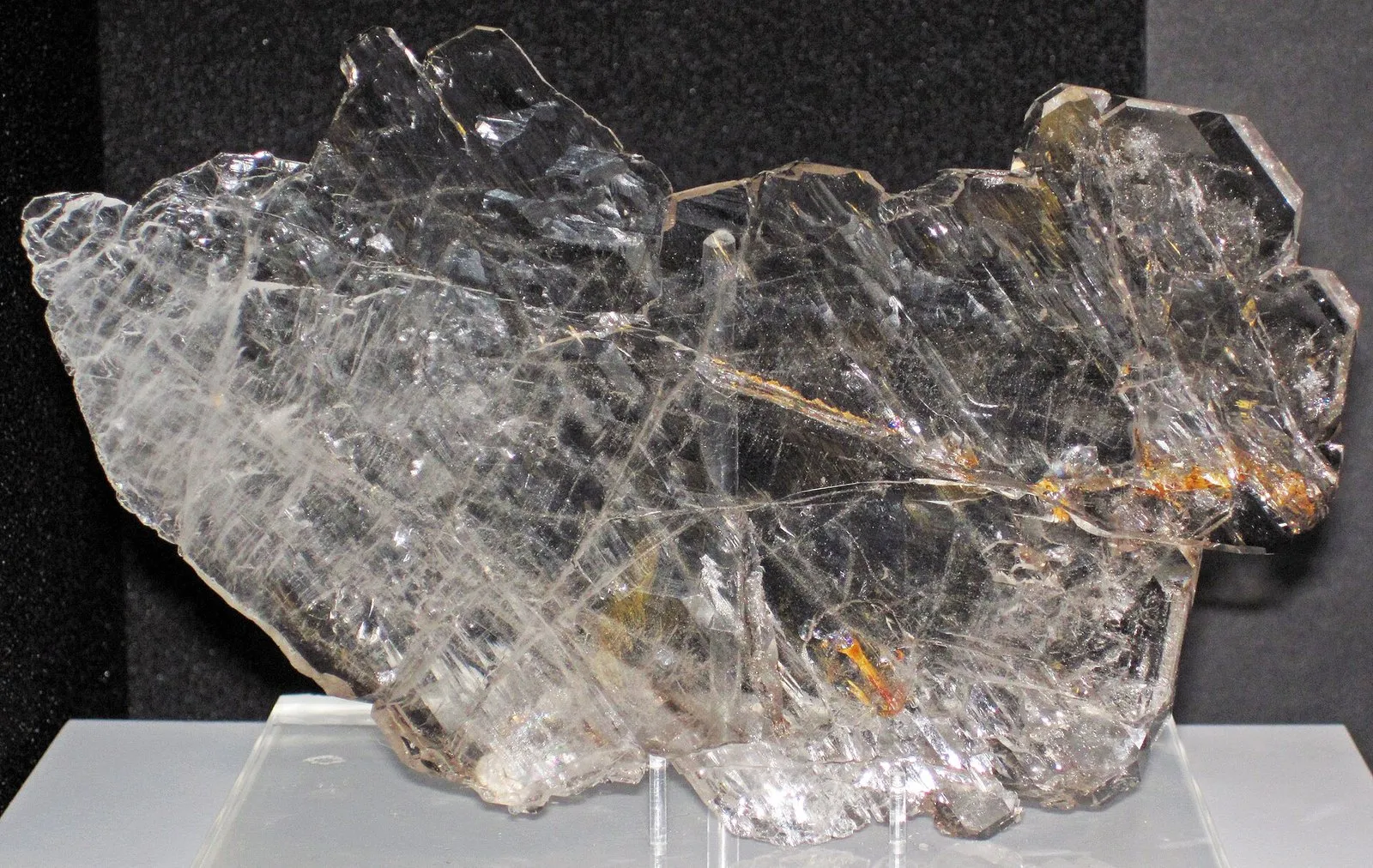
What is the difference between a mineral and an ore, and where does rock come in? In a few words: a mineral is a natural substance with a defined chemical composition and ordered atoms; a rock is a natural aggregate of minerals; and an ore is a mineral or rock that can be used at a profit. The first two concepts come from geology. The third also depends on economics and technology, and that is where most of the confusion lies.
In short
- Mineral: a natural solid, formed by geological processes, with a defined chemical composition and a crystal structure. The official IMA list had 6,226 valid species in July 2026.
- Rock: a solid, natural aggregate of one or more minerals. It can be igneous, sedimentary or metamorphic.
- Ore: rock with valuable minerals that can be recovered economically. What is ore today may stop being ore tomorrow, and vice versa.
- At the mine, whatever is not ore becomes waste rock (before processing) or tailings (after it).
- Mineraloids, such as volcanic glass, look like minerals but have no crystal structure.
What is a mineral
The definition used as the reference worldwide is that of the IMA (International Mineralogical Association), the body that approves new minerals. According to the guidelines of its commission, a mineral substance is a naturally occurring solid formed by geological processes, on Earth or on other celestial bodies. To be a mineral species, it also needs a well-defined chemical composition and crystallographic properties.
The SGB (Geological Survey of Brazil) sums up the main characteristics in three: crystal structure, defined chemical composition and ordered atomic arrangement. In general, minerals are inorganic. Putting it all together, a mineral is:
- Natural: substances made by humans are not minerals, according to the IMA guidelines.
- Solid.
- Generally inorganic.
- Of defined chemical composition, which can be written as a formula.
- Crystalline, meaning its atoms are arranged in a repeating geometric pattern.
Some examples, with the formulas from the official IMA list:
| Mineral | Formula | Chemical group |
|---|---|---|
| Quartz | SiO₂ | Silicate |
| Albite (feldspar group) | NaAlSi₃O₈ | Silicate |
| Hematite | Fe₂O₃ | Oxide |
| Calcite | CaCO₃ | Carbonate |
Structure makes all the difference. Diamond and graphite are made of the same element, carbon, but have different atomic arrangements. That is why diamond is extremely hard and graphite is soft enough to be in the tip of a pencil, the SGB explains.
How many minerals are there?
The IMA maintains the official list and updates it often. In the July 2026 version, it contains 6,226 valid mineral species. The list includes minerals approved since the IMA was founded in 1958, plus minerals described before that and accepted as valid.
What is a rock
For the USGS, the United States Geological Survey, a rock is an aggregate of one or more minerals, or a body of undifferentiated mineral matter. The SGB defines rock as a solid, natural aggregate of minerals and notes that it can also be made of mineraloids. Think of it this way: minerals are the bricks; rock is the wall.
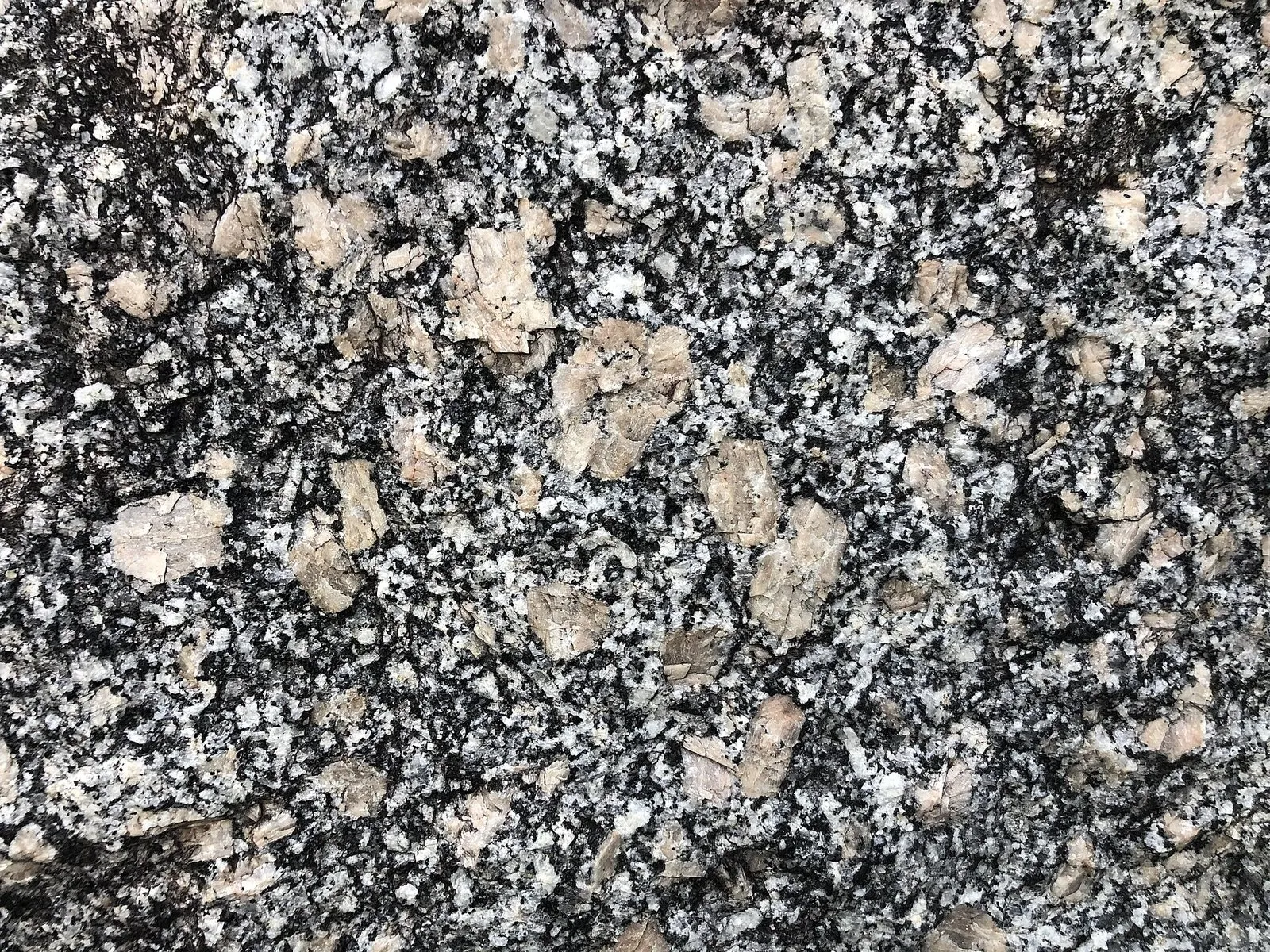
Granite is a good example. According to the Smithsonian National Museum of Natural History, it is made mainly of quartz, feldspar and mica. Rocks fall into three large groups, depending on their origin:
| Type | How it forms | Examples |
|---|---|---|
| Igneous (magmatic) | Solidification of magma, inside the crust (granite) or at the surface (basalt) | Granite, basalt, obsidian |
| Sedimentary | Erosion, transport, deposition and compaction of sediments; this is where fossils are found | Sandstone, limestone, shale |
| Metamorphic | Transformation of another rock by high pressure and temperature, without melting | Marble, quartzite, gneiss, itabirite |
Brazil has examples of every type. The SGB cites the sandstone of the Botucatu Formation, of eolian origin (formed by wind-blown sand), and shows the classic metamorphic pairs: limestone becomes marble, sandstone becomes quartzite and granite becomes gneiss.
What is an ore
This is where geology meets economics. The book Tratamento de Minérios (Mineral Processing), from CETEM, Brazil’s Center for Mineral Technology, defines ore as any rock made of a mineral or an aggregate of minerals that contains one or more valuable minerals that can be recovered economically. These valuable minerals are called ore minerals. The rest, which are not recovered, make up the gangue.
In other words, being ore is not a property of the rock alone. It depends on three things:
- Grade: the concentration of what you are after. A scheelite ore (a tungsten mineral) with 0.35% tungsten oxide cannot be used directly in metallurgy, according to CETEM. Only after it is concentrated, to about 70%, does it become useful.
- Price: how much the product is worth on the market. Production costs and sale prices influence the decision whether or not to mine a block of rock, as mine planning studies from UFMG (the Federal University of Minas Gerais) show.
- Technology: whether there is a viable process to separate what you want. CETEM cites the nickel laterites of Goiás and Pará, Brazilian states, which cannot be concentrated the usual way because the nickel is spread through the gangue minerals. Using them is only viable by going straight to chemical extraction of the metal.
Cutoff grade, simply put
The cutoff grade is the line that separates ore from waste rock. Imagine the mine is divided into blocks and each block has a grade. Blocks above the cutoff grade go to the processing plant; those below go to the waste rock pile. In its simplest version, it is the minimum grade that pays all the costs of extracting, processing and selling the material.
Because price and cost are part of the calculation, the cutoff grade is not fixed. If the price goes up or the cost goes down, poorer blocks may become worthwhile. That is why the same rock can be classified as ore in one scenario and as waste rock in another.
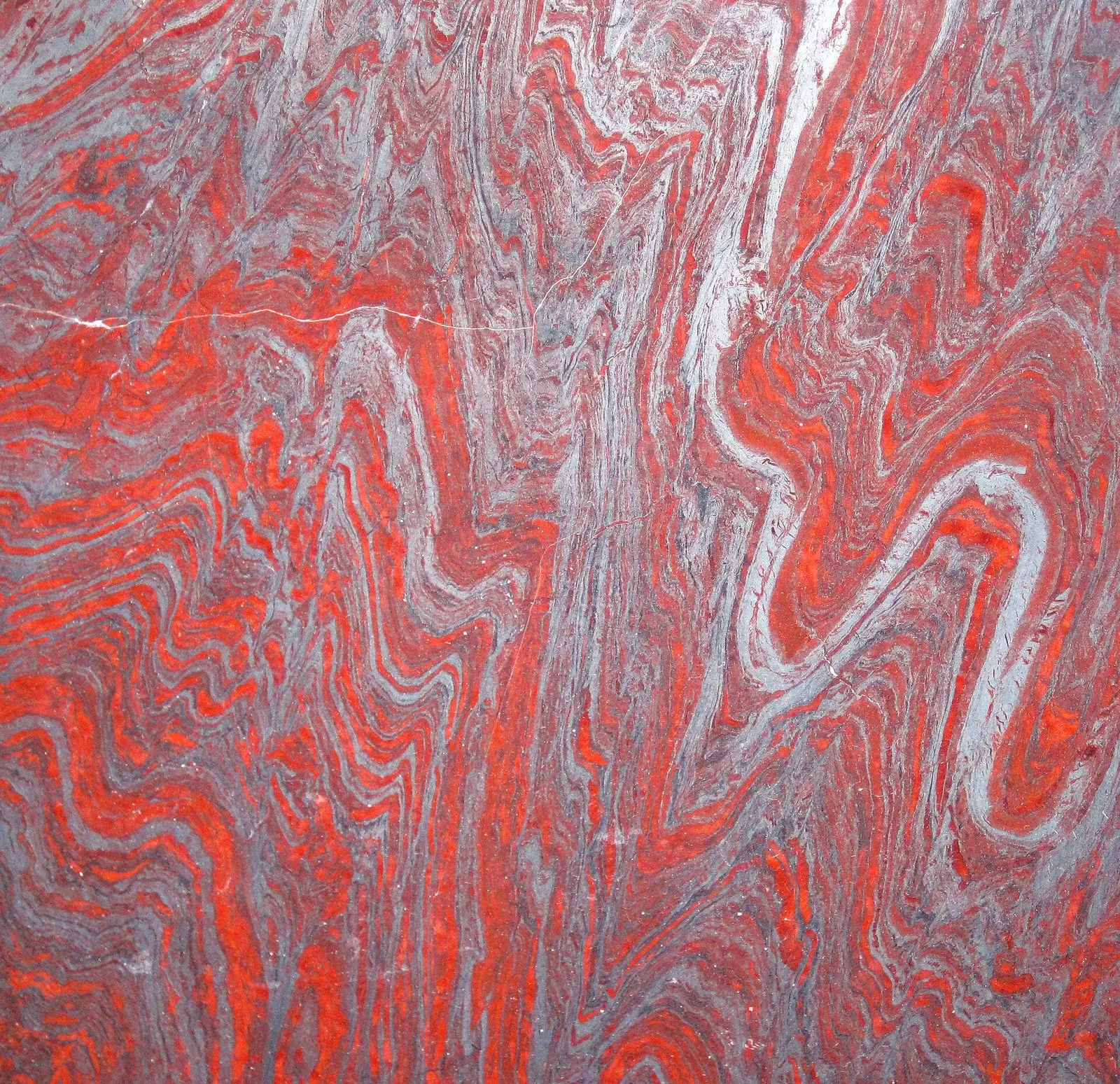
Itabirite illustrates this idea well. It is a banded iron formation that has undergone metamorphism, common in the Quadrilátero Ferrífero (Iron Quadrangle), in Minas Gerais, a state in southeastern Brazil. It alternates layers of iron oxides and quartz. A UFMG study of a deposit in the region classified the materials by iron grade: poor itabirite (20% to 45% iron), intermediate (45% to 58%), rich (58% to 64%) and hematite (64% or more). In this case, hematite is the ore mineral, and quartz plays the role of gangue.
Want to understand how this ore comes out of the ground? The step-by-step is in How a mine works: from discovery to closure. And the difference between resources and reserves appears in How much rare earth does Brazil have?.
Ore, gangue, waste rock and tailings
These four terms show up together and are often confused:
| Term | What it is | Where it appears |
|---|---|---|
| Ore | Rock with valuable minerals that can be recovered at a profit | Goes from the mine to the plant |
| Gangue | The minerals of no interest mixed into the ore itself | Inside the ore |
| Waste rock | Material removed during mining and discarded before processing | Waste rock piles, at the mine |
| Tailings | Material discarded during or after processing | Tailings dams or tailings piles |
The definitions of waste rock and tailings are those of ANM Resolution No. 85/2021, issued by the ANM (Brazil’s National Mining Agency), which regulated the use of these materials. CETEM points to a trend of studying ways to use these materials, such as using iron ore tailings in roads instead of crushed stone.
Mineraloids: the almost-minerals
Some natural substances look like minerals but have no crystal structure. These are mineraloids. The classic example, cited by the SGB, is volcanic glass, such as obsidian: the lava cools so fast that the atoms have no time to organize themselves.
Geology books also often cite amber, pearl and opal. But opal is a borderline case: it appears on the official IMA list, with the formula SiO₂·nH₂O, as a mineral accepted by tradition. Coal, despite being called “carvão mineral” (mineral coal) in Portuguese, is not a mineral: the SGB itself treats it as a mineraloid in one publication and as a sedimentary rock in another.
Comparison table: mineral, rock and ore
| Mineral | Rock | Ore | |
|---|---|---|---|
| What it is | Natural substance with a formula and crystal structure | Natural aggregate of minerals | Rock with minerals that can be recovered at a profit |
| What defines it | Chemistry and crystallography | Origin and composition | Grade, price and technology |
| Does it change over time? | No | Only on a geological scale | Yes, with the market and technology |
| Example | Hematite | Granite | Itabirite with a high enough iron grade |
Mining is behind many things in everyday life, as Mining in everyday life shows. And the person who decides, in practice, whether a block is ore or waste rock is often a professional like the one described in What does a mining engineer do.
Common exam traps
- “Every ore is a mineral.” Wrong. By CETEM’s definition, ore is a rock, which may contain several minerals.
- “Rock is always made of two or more minerals.” Careful. Some school materials say so, but the USGS accepts rocks made of just one mineral.
- “Feldspar is a mineral.” In everyday language, that is fine. But the IMA list has no species called feldspar: it lists, for example, albite and orthoclase, which belong to that group.
- “Synthetic diamond is a mineral.” No. Substances made by humans are not minerals, according to the IMA guidelines.
- “Ice is not a mineral because it is water.” Ice is on the official IMA list. Liquid water is not. Mercury, which is liquid at room temperature, is a historical exception accepted on the list.
- “Coal is a mineral.” No: it has neither a crystal structure nor a fixed formula.
Frequently asked questions
What is the difference between a mineral and an ore?
A mineral is a natural substance with a defined chemical composition and a crystal structure. An ore is rock that contains valuable minerals in a large enough quantity to be recovered at a profit.
What is the difference between a mineral and a rock?
A mineral is a single substance, such as quartz. A rock is an aggregate of one or more minerals, such as granite.
How many minerals are there?
The official list of the International Mineralogical Association (IMA) had 6,226 valid species in its July 2026 update. The number grows every year as new minerals are approved.
What is cutoff grade?
It is the minimum grade that separates ore from waste rock. Material above it goes to the processing plant; material below it is discarded. It changes with the price of the product and the costs of the mine.
What is a mineraloid?
It is a natural substance similar to a mineral but without a crystal structure, such as volcanic glass (obsidian). Amber and opal are also often cited, although opal appears on the official IMA list.
Found this article useful? Share it with someone who also wants to understand mining.
Share
Sources
- SGB (Geological Survey of Brazil) / SGBeduca – Minerais e rochas: caderno do professor (Minerals and rocks: teacher's handbook)
- SGB / SGBeduca – A disputa das rochas (The rock contest, glossary)
- IMA-CNMNC – The New IMA List of Minerals (updated July 2026)
- Nickel and Grice – The IMA Commission on New Minerals and Mineral Names: procedures and guidelines on mineral nomenclature (The Canadian Mineralogist, 1998)
- USGS – What is the difference between a rock and a mineral?
- USGS – Glossary of Open-File Report 01-128 (entries feldspar, alkali feldspar and orthoclase)
- Smithsonian National Museum of Natural History (Q?rius) – Granite
- CETEM – Tratamento de Minérios (Mineral Processing), 5th edition (2010), chapter 1: Introduction to mineral processing
- Baeta – Otimização do teor de corte e seu impacto nas operações da Samarco (Cutoff grade optimization and its impact on Samarco's operations; master's thesis, UFMG, 2025)
- Crego – O teor de corte como um output do planejamento estratégico (Cutoff grade as an output of strategic planning; master's thesis, UFMG, 2023)
- Roncato et al. (UFMG) – Geochemistry and mineralogy of the banded iron formation of the Moeda Syncline, Quadrilátero Ferrífero (Geociências, 2024)
- Demarest – ANM regulates the use of mining waste rock and tailings (ANM Resolution No. 85/2021)
- Bentley et al. (OpenGeology) – Historical Geology, 4.2: What is a mineral
- Perkins (University of North Dakota) – Mineralogy, 1.2.5: Crystalline and non-crystalline mineral materials
Comments
No comments yet. Be the first to comment.