Are rare earths radioactive? Myth versus fact
Rare earths are not radioactive, but their ore often carries thorium and uranium. Where the risk comes from, how Brazil regulates it and what is exaggerated.
Translated from the original article in Portuguese. Read the original.
Are rare earths radioactive? In practice, no: with one exception, promethium, rare earth elements pose no radiation risk. What tends to be radioactive is the ore. Minerals such as monazite carry thorium and uranium along with them, and that is why rare earth mining and, above all, processing require radiation control.
In short
- The rare earth elements are not the problem. Only promethium is truly radioactive, and it barely exists in nature.
- The ore can be radioactive. Monazite generally contains 5% to 6% thorium oxide, according to Brazil’s Center for Mineral Technology (CETEM).
- The risk grows during processing, when thorium becomes concentrated in residues that must be stored safely.
- Ionic clays tend to have much less thorium and uranium than monazite deposits.
- In Brazil, the regulator is the National Nuclear Safety Authority (ANSN), whose rules use a threshold of 10 Bq/g.
Are rare earth elements radioactive?
Myth, with one exception. Rare earths are 17 chemical elements (see Rare earths: what they are, what they’re used for and why they matter to Brazil). According to the International Atomic Energy Agency (IAEA), the exception is promethium (atomic number 61), which is radioactive and almost absent from nature because of its short half-life. (Half-life is the time it takes for half of the atoms to decay.)
Promethium has no stable isotope, according to Oak Ridge National Laboratory in the United States, and only about half a kilogram of it exists in the Earth’s crust. Its longest-lived isotope, promethium-145, has a half-life of 17.7 years, according to the IAEA.
Strictly speaking, some natural isotopes of lanthanum, samarium and lutetium also decay, but with half-lives of 38 billion to 107 billion years. Radiation protection rules, both the IAEA’s and Brazil’s, focus on the uranium and thorium series.
Where the radioactivity comes from: thorium and uranium in the ore
According to the US Environmental Protection Agency (EPA), rare earths are extracted mainly from ores that also naturally contain uranium and thorium. The amount varies widely:
| Material | Thorium oxide (ThO₂) | Uranium oxide (U₃O₈) |
|---|---|---|
| Monazite (concentrated mineral) | 5% to 6% | 0.2% to 0.3% |
| Bastnaesite ore (China and US) | 0.02% to 0.1% | 0.002% to 0.004% |
| Heavy mineral sands | 0.0006% to 0.4% | 0.0003% to 0.006% |
| Rare earth clay (China) | 0.005% | 0.005% |
| Ordinary soil (world average) | 0.0008% | 0.0003% |
Table sources: CETEM (monazite) and IAEA (other rows).
According to the IAEA, monazite has the highest thorium content among rare earth minerals, while bastnaesite, the largest commercial source, has relatively little. Monazite typically has about 200 becquerels per gram (Bq/g) of thorium-232. The becquerel measures how many atoms decay per second.
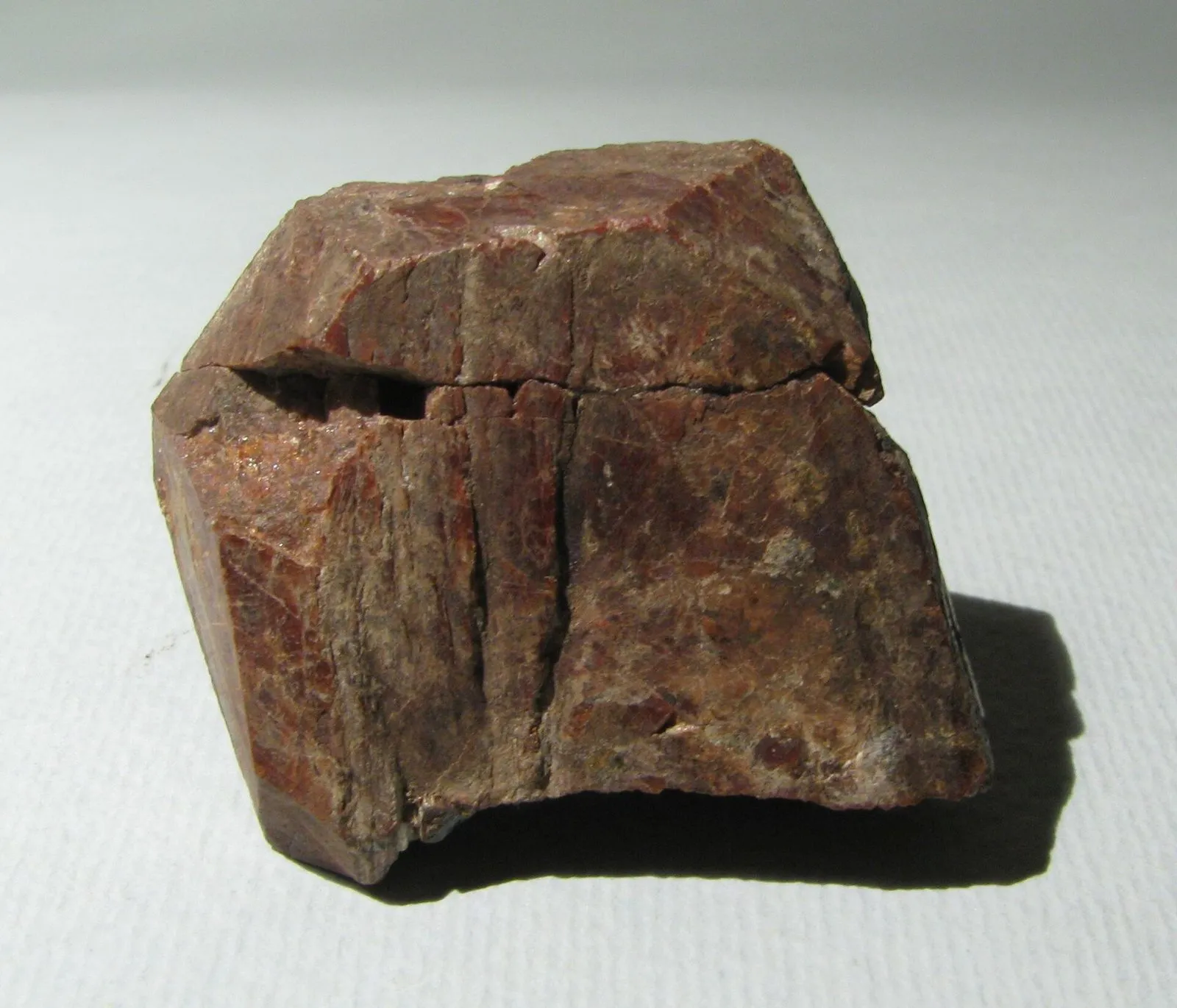
An important detail: according to the IAEA, mineral processing (the step that separates the useful mineral from the rest) increases the rare earth content and, in general, the content of radioactive elements as well.
What NORM and TENORM are
Two abbreviations come up a lot on this topic. According to the EPA:
- NORM is naturally occurring radioactive material, such as rocks containing uranium or thorium, as found in nature.
- TENORM is that material when it has been concentrated or exposed by human activity, as in mining.
The residue from a plant that separated thorium from rare earths is TENORM, and that is where most of the care is needed. The IAEA considers that, in general, there is no need to regulate materials with less than 1 Bq/g of elements from the uranium and thorium series.
Why ionic clays tend to have less thorium
In hard-rock deposits, such as carbonatites, uranium and thorium sit inside the same minerals that hold the rare earths, such as monazite and xenotime. According to a 2025 scientific review, one of the reasons for the interest in ionic clays is precisely their low uranium and thorium content.
The extraction process helps. In these clays, the rare earths are weakly attached to the surface of the particles and come off with a salt solution (see Ionic clay: the type of deposit that put Brazil on the rare earth map). According to the IAEA, this leaching is quite selective and carries few impurities. It is a tendency, not a guarantee: each deposit needs to be measured.
How this is regulated in Brazil
Federal monopoly. Under article 177 of Brazil’s Constitution, the exploration, mining, industrialization and trade of nuclear ores and minerals are a monopoly of the federal government. The state-owned company in this field is Indústrias Nucleares do Brasil (INB).
The regulator. Law 14,222/2021 created the ANSN by splitting off a division of the National Nuclear Energy Commission (CNEN). According to the ANSN itself, it began operating with all its powers on August 29, 2025, when its president was appointed. The law requires anyone who finds uranium or thorium in a mining area to notify the ANSN.
The standard. NN 4.01, issued by CNEN in 2016, classifies mines and plants that handle uranium and thorium by activity concentration:
| Category | Activity concentration | What the company must submit |
|---|---|---|
| I | above 500 Bq/g | Radiation safety analysis report |
| II | 100 to 500 Bq/g | Plans for worker protection, environmental monitoring, waste and decommissioning |
| III | 10 to 100 Bq/g | Preliminary information on the ore, mine and residues |
A facility is exempt if its annual average is up to 10 Bq/g over three years of operation, provided that workers do not receive more than 1 millisievert (mSv) per year.
Using this criterion, on August 31, 2026, the ANSN exempted the Caldeira Project pilot plant, in Poços de Caldas, in the state of Minas Gerais, from radiation control, because all samples were below 10 Bq/g, according to the newspaper Diário do Comércio. See Caldeira Project, in Poços de Caldas: what the purchase by Lynas means.
Monazite sands and Brazil
According to CETEM, rare earth production in Brazil began in the late 1940s, at the Santo Amaro plant, in the city of São Paulo, with monazite from the sands of Buena, in the north of the state of Rio de Janeiro. In 1960, because of the uranium and thorium in monazite, the activities were transferred to CNEN and, after several changes, ended up with INB, which for decades exploited sands from northern Rio de Janeiro, southern Espírito Santo and southern Bahia.
According to INB, the Buena unit, in São Francisco de Itabapoana (Rio de Janeiro state), separated and sold ilmenite, zircon, rutile and monazite, and in 2024 its use was granted for 30 years to ADL Mineração e Participações. The country’s other types of deposit are covered in Rare earths in Brazil: where they are and which projects exist.
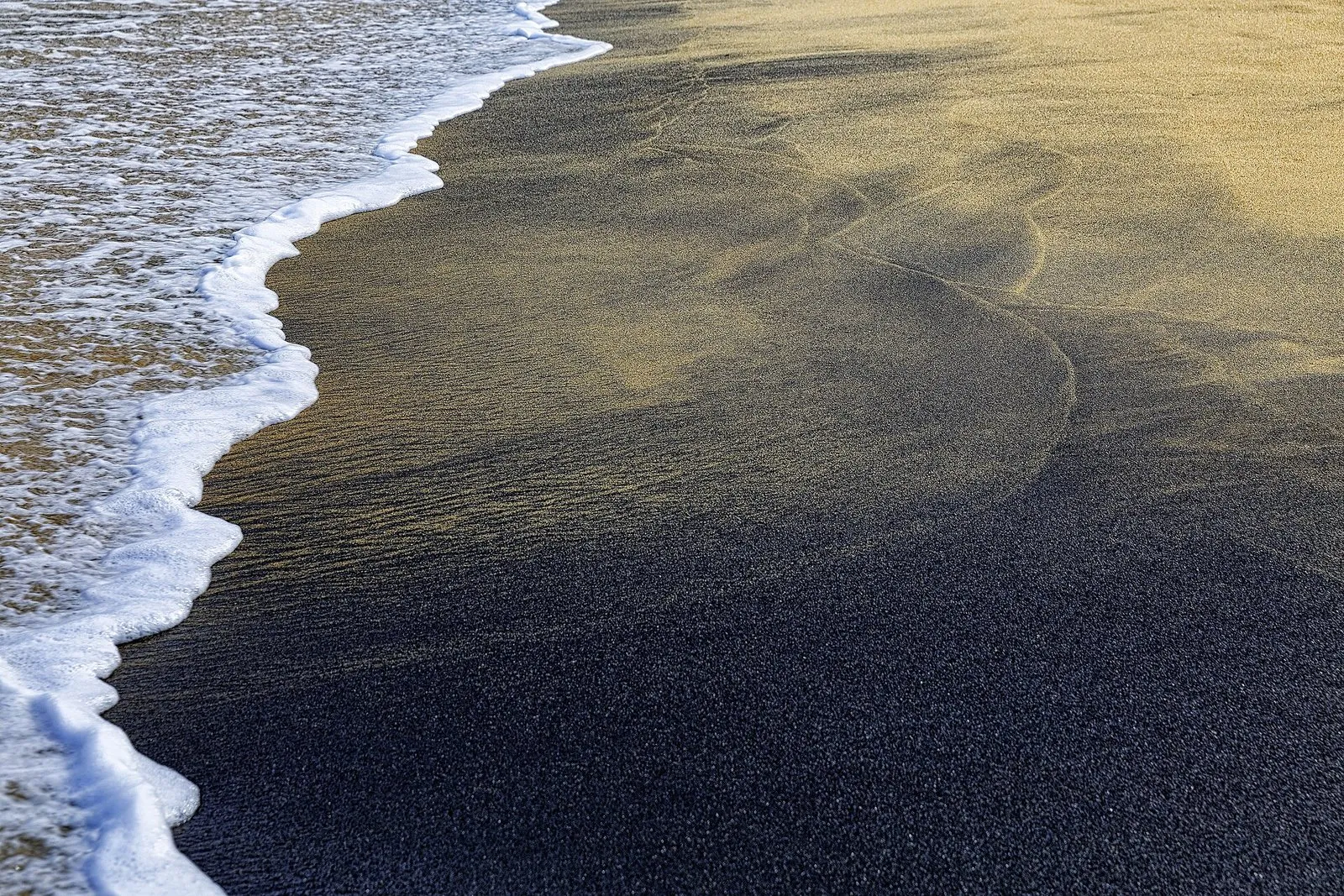
A curiosity: the black sands of Guarapari (Espírito Santo). Areia Preta (“Black Sand”) Beach has dark sand containing monazite. According to researchers at the Federal University of Espírito Santo (UFES), the city is internationally known for this type of sand, which has historically been associated with supposed therapeutic properties. The team measured radiation on the beach between September 2024 and June 2025 and found that it varies over time.
Where the real risks are
In processing. According to the EPA, separating rare earths involves removing uranium and thorium, and that is what generates TENORM-type residues.
Brazil’s legacy. According to the IAEA, the Santo Amaro plant operated from 1949 to 1992 and, during that time, residues were stored and transported without radiation protection measures, which contaminated the soil. During dismantling, between 1994 and 1998, 532 metric tons of thorium hydroxide residue were removed, in 3,250 drums.
The Lynas controversy in Malaysia. Lynas, which announced the purchase of the Caldeira Project, has been separating rare earths in Kuantan, Malaysia, since 2012. In 2014, an IAEA team concluded that the plant’s radiological risks were low, but recommended defining a final destination for the residues. The Malaysian government was tougher: according to the country’s science ministry, the plant generated about 1.08 million metric tons of radioactive residue by the end of 2022, and “no party has the right to continuously produce radioactive waste” there.
The 2020 license required the step that generates this residue (cracking and leaching) to have a plant outside Malaysia by July 2023, according to Lynas. In October 2023, the rule was relaxed: the step can continue in the country if the residue has less than 1 Bq/g, according to the newspaper The Star. The Australian plant, in Kalgoorlie, began production in 2024, according to the company.
How these risks are controlled
The IAEA recommends control proportional to the risk: measuring the radioactivity of materials, controlling worker doses (which come from gamma radiation, dust and thoron, a gas in the thorium chain), monitoring the environment, and storing residues in engineered repositories. In Brazil, these items appear in the plans required by NN 4.01.
The lesson from Santo Amaro is that the risk is not in the rare earth itself, but in residues poorly managed for a long time. For other common questions, see Mining myths and facts: what is exaggerated and what is real.
Frequently asked questions
Are rare earths radioactive?
The rare earth elements, in practice, are not. The exception is promethium, which has no stable isotope and barely exists in nature. The radioactivity comes from the thorium and uranium that usually accompany the ore.
Are products made with rare earths radioactive?
In general, only very slightly. According to the IAEA, some already separated compounds have residual radioactivity, depending on their purity, but no reported case exceeded 10 Bq/g. The main concern lies with the ores and the residues.
Why is monazite radioactive?
Because it contains thorium and a little uranium. According to CETEM, it generally has 5% to 6% thorium oxide and 0.2% to 0.3% uranium oxide.
Who oversees radioactivity in rare earth mining in Brazil?
The National Nuclear Safety Authority (ANSN), created by Law 14,222/2021 out of CNEN. It applies standard NN 4.01, which exempts facilities with up to 10 Bq/g and imposes stricter requirements as radioactivity increases.
Found this article useful? Share it with someone who also wants to understand mining.
Share
Sources
- IAEA – Radiation Protection and NORM Residue Management in the Production of Rare Earths from Thorium Containing Minerals, Safety Reports Series No. 68 (2011)
- IAEA – Live Chart of Nuclides (half-lives of Pm-145, La-138, Sm-147 and Lu-176, accessed October 26, 2026)
- Oak Ridge National Laboratory, via Phys.org – Promethium bound: Rare earth element's secrets exposed (May 22, 2024)
- EPA (US Environmental Protection Agency) – Technologically Enhanced Naturally Occurring Radioactive Materials (TENORM)
- EPA – TENORM: Rare Earths Mining Wastes
- CETEM – Rochas e Minerais Industriais (Industrial Rocks and Minerals), chapter 36: Terras Raras (Rare Earths) (2008)
- Russo et al. – The fundamentals of rare earth element ion adsorption clay deposits, Journal of Geochemical Exploration, vol. 278 (2025)
- Brazilian Federal Constitution of 1988, article 177
- Law No. 14,222/2021 (creates the National Nuclear Safety Authority)
- ANSN – presentation to the Mines and Energy Committee of the Chamber of Deputies (September 30, 2025)
- CNEN – Standard CNEN NN 4.01: Safety and radiation protection requirements for mining and industrial facilities (CNEN Resolution 208/2016)
- Diário do Comércio – ANSN isenta planta piloto de terras raras da Meteoric de controle regulatório (ANSN exempts Meteoric's rare earth pilot plant from regulatory control) (September 4, 2026)
- INB – Buena Unit
- Silva et al. (UFES) – Análise do perfil radiométrico dinâmico da Praia da Areia Preta (Analysis of the dynamic radiometric profile of Areia Preta Beach), 15th Scientific Meeting on Applied Physics (2025)
- IAEA – IAEA concludes follow-up review of Malaysia rare earth plant, press release (October 17, 2014)
- Malaysian Ministry of Science, Technology and Innovation (MOSTI) – Lynas License Renewal: no more radioactive waste can be produced by Lynas in Malaysia (February 15, 2023)
- Lynas Corporation – Lynas Malaysia operating licence renewed for three years, ASX announcement (February 27, 2020)
- The Star – Lynas' licensing terms revised (October 25, 2023)
- Lynas Rare Earths – Annual Report 2024 (October 2024)
Comments
No comments yet. Be the first to comment.