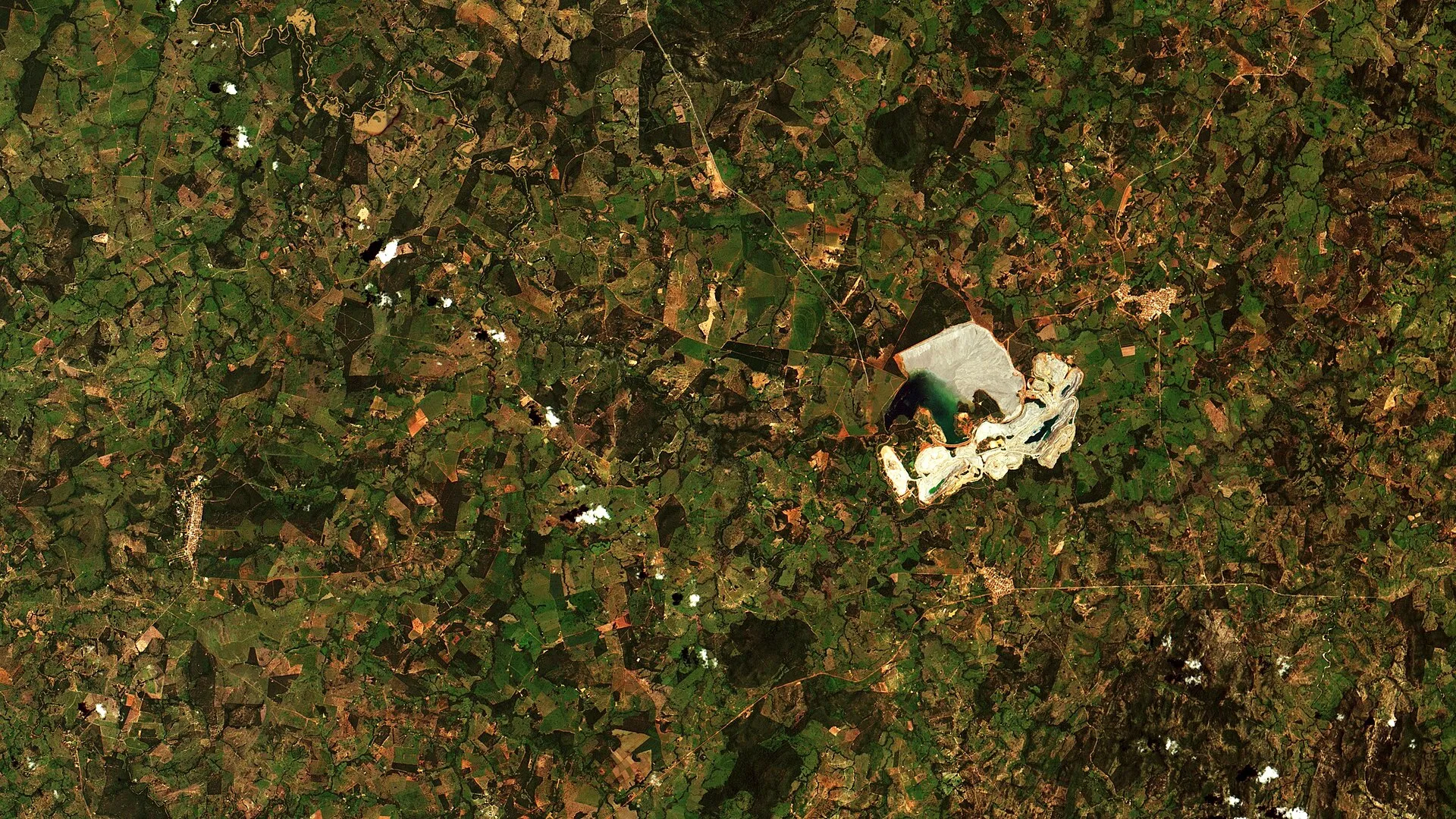
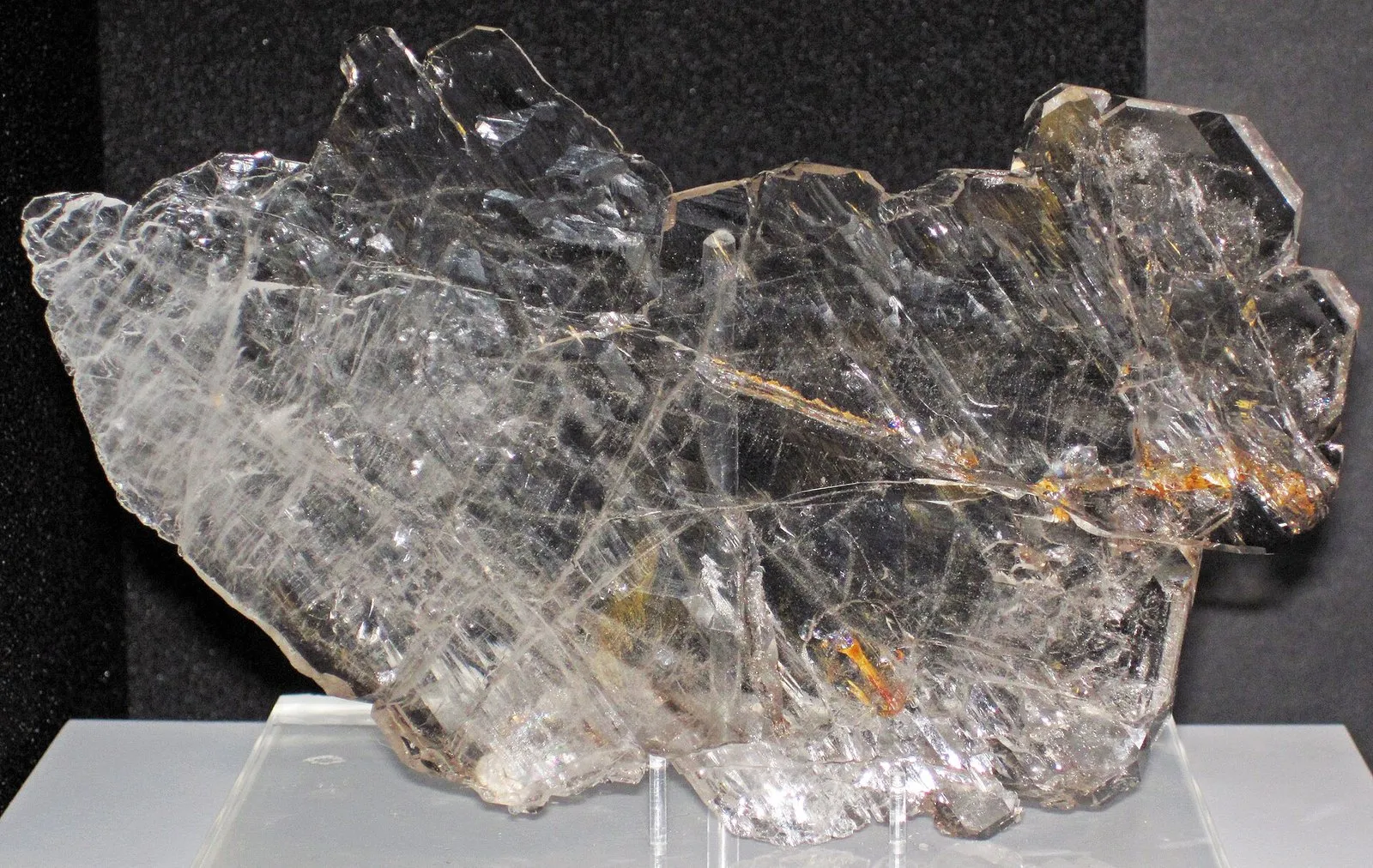
Mineral processing: how ore becomes a raw material
Mineral processing step by step: crushing, grinding, classification, concentration, dewatering, grade and recovery, tailings, water and energy.
Translated from the original article in Portuguese. Read the original.
Mineral processing is the set of operations that turns raw ore, fresh out of the mine, into a product that industry can use. It breaks the rock, separates the valuable mineral from everything else and removes the water, without changing the chemical identity of the minerals. It is the link between mining (extraction) and metallurgy or the chemical industry.
In short
- Mineral processing changes the size of the particles and the concentration of the valuable mineral, without transforming it chemically.
- The main steps are comminution (crushing and grinding), classification, concentration and dewatering.
- The result is a concentrate, rich in the useful mineral, and tailings, which need a safe destination.
- Two numbers measure success: the grade of the concentrate and the recovery of the mineral.
- In Brazil, the iron ore from Carajás (in the state of Pará) is almost only crushed and screened; the itabirite of Minas Gerais has to be concentrated.
What is mineral processing
According to the Center for Mineral Technology (CETEM, a Brazilian federal research center), mineral processing, or ore treatment, consists of operations that change the particle size distribution (the size of the grains), the relative concentration of the minerals or their shape, without changing the chemical or physical identity of the minerals.
The mineral that has value is the ore mineral; what comes along with it and is not used is the gangue (see Mineral, ore and rock: what’s the difference).
Why not use the ore just as it comes out of the mine? Because it is often too poor. CETEM gives an example: a scheelite ore (a tungsten mineral) with 0.35% tungsten oxide cannot be used directly in metallurgy. Once concentrated to about 70%, it can.
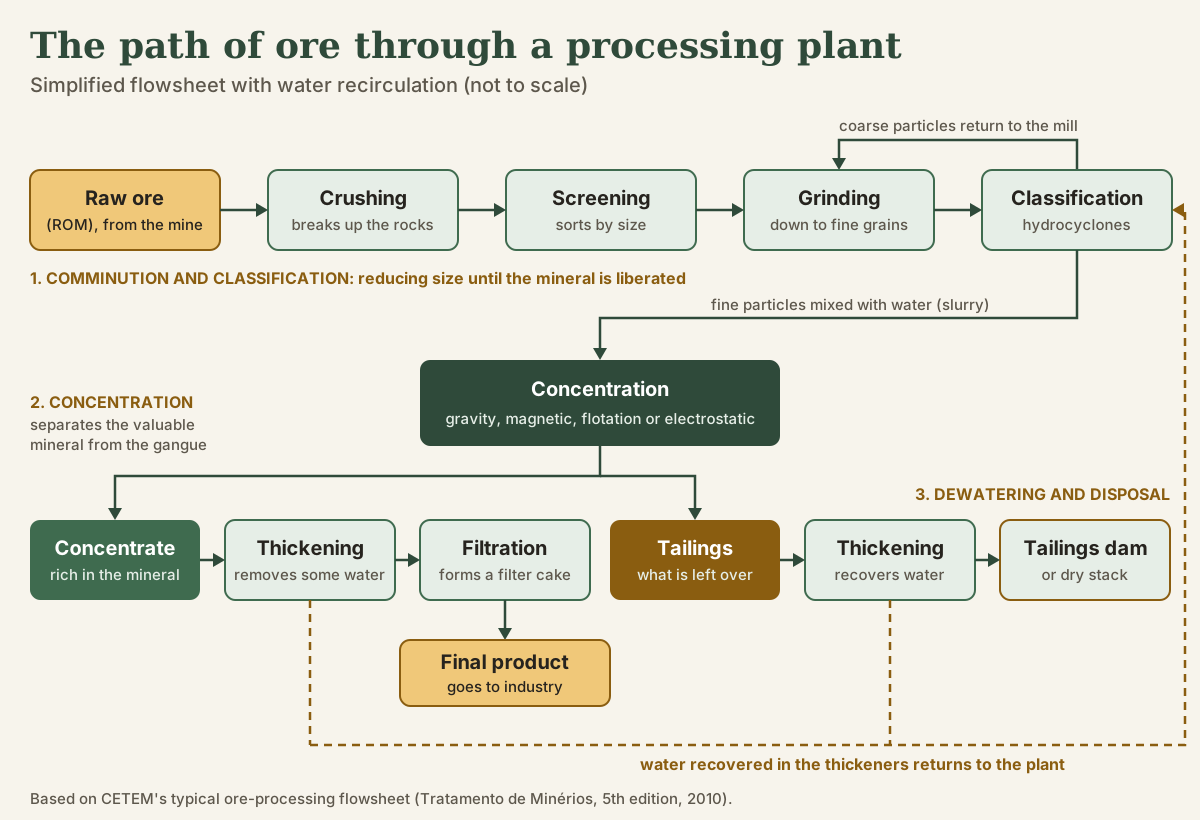
Comminution: crushing and grinding
A mineral can only be separated when it is liberated, that is, when each particle ideally contains a single mineral. For that, the rock has to be reduced in size. This process is called comminution and has two phases:
- Crushing: breaks blocks that may be about 1,000 mm down to fragments of around 10 mm, according to CETEM. It is done in stages, with jaw, gyratory or cone crushers, among others.
- Grinding: the last stage of fragmentation. In rotating cylindrical mills with steel rods or balls inside, the particles are reduced by impact, compression, abrasion and attrition to the right size for liberation. It is usually done wet, which uses less energy and eliminates dust.
Grinding too little leaves the mineral locked in the gangue and brings recovery down. Grinding too much wastes energy and increases losses in concentration. That is why, according to CETEM, the rule is to break the rock only as much as strictly necessary.
Classification: screens and hydrocyclones
In screening, particles are separated by their physical size, on a screen. For very fine particles, screens lose efficiency and classification takes over, separating grains by how fast they move through water.
The most widely used equipment is the hydrocyclone: the pulp (water with solids) enters under pressure and spins; the coarse, dense particles exit at the bottom, and the fine ones exit at the top with most of the water. In closed-circuit grinding, the most common in industry, the coarse fraction goes back to the mill.
Concentration: separating what is valuable from what is not
Concentration takes advantage of some difference in properties between the ore mineral and the gangue. The main methods:
| Method | Difference used | Examples of use cited by CETEM |
|---|---|---|
| Gravity | Density, size and shape, under gravity or centrifugal force | Jigs, tables and spirals; the Egyptians already recovered alluvial gold this way |
| Magnetic | Response to a magnetic field (magnetic susceptibility) | Iron ore in Itabira (Minas Gerais); removing iron from kaolin |
| Flotation | Affinity of the surface for water or air | Iron, phosphate, zinc and copper ores |
| Electrostatic | Conductivity and electric charges on the surface | Ilmenite, rutile, zircon; requires dry material |
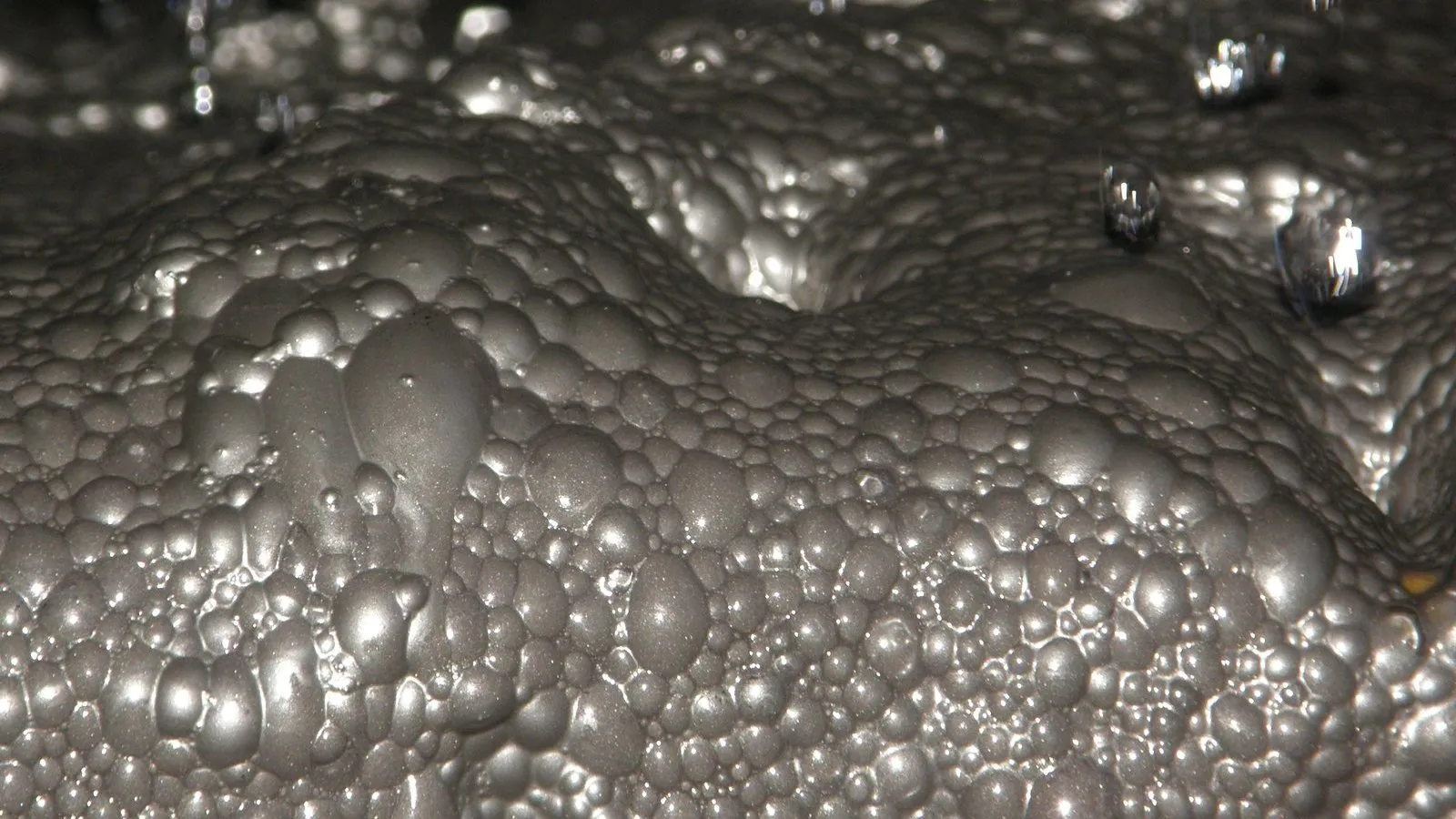
Flotation deserves a paragraph of its own, because it is the least intuitive. Air bubbles are blown into the pulp. A reagent called a collector attaches to the surface of the mineral you want to separate and makes it hydrophobic, that is, water-repellent. These particles stick to the bubbles, rise and are held in a froth, like the one in the photo at the top of this page, which is separated from the rest. Another reagent, the depressant, keeps the collector from acting on the unwanted minerals.
In Brazilian iron ore, the logic is reversed: reverse cationic flotation floats the quartz gangue, with amines as the collector, while corn starch holds the iron oxides at the bottom. Separating chemically similar elements, such as the rare earths, requires chemical processes, described in How rare earths are separated.
Dewatering: removing the water
Since concentration is usually done wet, the concentrate comes out soaked. Dewatering relies on two main types of equipment:
- Thickeners: large tanks where solids settle by gravity. The thickened solid leaves through the bottom, and the clarified water stays on top and can return to the process.
- Filters: force the water through a filter medium by a pressure difference (vacuum or pressure), leaving a drier “cake” of solids.
Grade and recovery: an example with numbers
Grade is the concentration of what matters, such as the percentage of iron. Recovery is the fraction of the valuable mineral in the feed that ended up in the concentrate. It is calculated like this, as in CETEM’s own example:
recovery = (concentrate mass × concentrate grade) ÷ (feed mass × feed grade)
A hypothetical example, with round numbers: a plant receives 100 tonnes of ore with 40% iron. So there are 40 tonnes of iron in the feed. It produces 50 tonnes of concentrate with 64% iron.
- Iron in the concentrate: 50 × 0.64 = 32 tonnes.
- Recovery: 32 ÷ 40 = 80%.
- Tailings: 50 tonnes, with the remaining 8 tonnes of iron, that is, 16% iron.
The grade rose from 40% to 64%, but 20% of the iron was lost in the tailings. According to CETEM, as a rule, the higher the concentrate grade, the lower the recovery. Improving both usually raises costs, and the plant has to find the balance.
Tailings: what is left over
Tailings are the fraction of the ore with no economic value that comes out of processing, different from waste rock, which is discarded while still at the mine. After conventional thickeners, according to CETEM, tailings still have only 40% to 50% solids, meaning they are a slurry. That is why they are stored in dams or, when filtered, in stacks. The risks and rules are covered in Tailings dams: what they are and why some are dangerous, and the other effects on soil, water and air in Environmental impacts of mining.
Water and energy: how much processing consumes
Energy. CETEM gathered data from Brazil’s National Energy Balance for 2007: mining and ore processing, not counting pelletizing, consumed 8.44 TWh of electricity, about 2% of the country’s electricity consumption. The average was about 7 kWh per tonne of product, with wide variation: from 2 to 3 kWh/t for crushed stone to about 17 kWh/t for iron ore. Comminution accounts for about half of the electricity used by a processing plant.
Water. According to the same book, from 2010, Brazil’s large mining companies recycled about 70% of their process water, reaching 90% in some cases. Thickening is precisely where much of that water is recovered.
A Brazilian example: Carajás and Itabira
Carajás (Pará, in northern Brazil). According to Vale, the iron grade there is already above 64%, and the material is only crushed and screened to be separated by size, without concentration. The trend is to do this without water, in what is called natural moisture processing: in 2019, 11 of the 17 lines at Carajás’s main plant were already dry. A 2001 flowchart of the plant, published by CETEM, shows three crushing stages and several screens, producing products such as lump ore, sinter feed and pellet feed. In 2019, the company reported that at the S11D project this route cuts water consumption by 93% compared with a conventional project.
Itabira and Minas Gerais (a state in southeastern Brazil). In the Iron Quadrangle (Quadrilátero Ferrífero), the ore is itabirite, a rock with bands of iron oxides and quartz. According to Vale, in 2019, the average grade in Minas Gerais was about 40% iron, which is why it has to be concentrated wet. The tailings, basically silica, go to dams. In Itabira, according to CETEM, Vale began using wet high-intensity magnetic separators in the early 1970s, which made it possible to use itabirites, until then not considered iron ore. The Cauê and Conceição plants also appear on a 2006 list, reproduced by CETEM, of the country’s main flotation plants. To reduce its use of dams, Vale reported in 2019 that it was studying investments in filtering and stacking its tailings.
Processing is one of the six stages in the life of a mine, described in How a mine works: from discovery to closure.
Frequently asked questions
What is mineral processing?
It is the set of operations that prepares ore for industrial use: reducing its size, separating the valuable mineral from the gangue and removing the water. In general, it does not change the chemical composition of the minerals.
What are the steps of mineral processing?
Comminution (crushing and grinding), classification (screens and hydrocyclones), concentration (gravity, magnetic, flotation or electrostatic), dewatering (thickening and filtering) and tailings disposal.
What is the difference between grade and recovery?
Grade is the percentage of the element of interest in a material. Recovery is the share of the element that entered the plant and ended up in the concentrate. In general, when one goes up, the other tends to go down.
What is flotation?
It is a concentration method in which air bubbles carry to the surface the particles that have been made hydrophobic by a reagent, the collector. The mineral leaves in the froth, and the rest stays in the pulp.
Found this article useful? Share it with someone who also wants to understand mining.
Share
Sources
- CETEM – Tratamento de Minérios (Mineral Processing), 5th edition (Luz, Sampaio and França, eds., 2010), full book: chapters 1 (Introduction), 3 (Characterization), 4 (Crushing and Grinding), 6 (Classification and Screening), 7 (Gravity Concentration), 9 (Magnetic and Electrostatic Separation), 11 (Flotation) and 15 (Solid-Liquid Separation)
- CETEM – Barragem de Rejeitos (Tailings Dams) (Lindolfo Soares), chapter 19 of the book Tratamento de Minérios, 5th edition (2010)
- Vale – Vale will invest 11 billion reais in dry processing of iron ore over the next five years (May 13, 2019)
Comments
No comments yet. Be the first to comment.