How much rare earth does Brazil have? Why the numbers change
Brazil has the second-largest rare earth reserves, but the figure fell from 21 to about 11 million metric tons. Here is what the revision means.
Translated from the original article in Portuguese. Read the original.
For years, the phrase “Brazil has the world’s second-largest rare earth reserves” came with a number: 21 million metric tons. Today, the latest statistics put it at about 11 million. Did Brazil shrink? Not exactly. This guide explains where these numbers come from, why they changed and why “resource” and “reserve” are not the same thing.
In short
- According to the United States Geological Survey (USGS), Brazil has about 11 million metric tons of rare earth reserves, the second largest in the world, behind China.
- Earlier editions listed 21 million. The reduction came from a revision by the ANM, Brazil’s National Mining Agency, based on international standards.
- A reserve is only the part of the ore proven viable to extract. A resource is a broader concept. The numbers change as knowledge about the deposits advances.
The current number
The main international survey on the subject is the Mineral Commodity Summaries, published every year by the USGS. The February 2026 edition lists these reserves:
| Country | Reserves (metric tons of rare earth oxides) |
|---|---|
| China | 44 million |
| Brazil | 11 million |
| Australia | 6.3 million |
| Russia | 3.8 million |
| Vietnam | 3.5 million |
| United States | 1.9 million |
| World total | more than 75 million |
That gives Brazil about 15% of world reserves, still in second place.
Two details help you read the table:
- The numbers are in metric tons of rare earth oxide equivalent (REO). It is a way of standardizing: instead of counting the whole rock, you count only the rare earth content, expressed as oxide.
- In Australia’s case, the USGS itself notes that reserves calculated under the Australian JORC standard add up to 3.3 million metric tons. In other words, even between countries, the way of counting makes a difference.
Why the number fell from 21 to 11 million
According to an analysis by researchers at the Center for Mineral Technology (CETEM), a Brazilian federal research center, published by the magazine Brasil Mineral, the ANM revised Brazil’s reserves in the Sumário Mineral 2025 (Mineral Summary 2025, base year 2024), lowering the figure from 21 million to 11.4 million metric tons.
According to the same analysis:
- the revision used data from the Relatório Anual de Lavra (RAL), the annual mining report that companies submit to the agency;
- the numbers now follow the standard of the Comissão Brasileira de Recursos e Reservas (CBRR), the Brazilian Commission for Resources and Reserves, which is aligned with international practices and with ANM Resolution No. 94/2022;
- the goal is to make the reported data more accurate.
The USGS, in turn, states that it revised Brazil’s reserves in the 2026 edition based on government reports, and now lists about 11 million metric tons.
In other words: the rare earths did not disappear. What changed was the yardstick. With stricter criteria, part of what used to be counted as reserves no longer made it into that figure.
Resource and reserve: what is the difference?
This is the key to understanding the change. In the standard used by the CBRR, which follows the international approach of CRIRSCO, mineral deposits are classified into two broad categories:
A mineral resource is a concentration of ore with reasonable prospects of eventual extraction. It is divided into three levels, according to how well it is known:
- Inferred: estimated with little data, with more uncertainty.
- Indicated: with enough data for a reasonable estimate.
- Measured: with detailed data and greater confidence.
A mineral reserve is the part of an indicated or measured resource that, after technical and economic studies, has proven viable to extract. It is divided into probable and proved.
Every reserve comes from a resource, but not every resource becomes a reserve. That is why a reserve is usually much smaller than the resource it came from.
A real example
The Caldeira Project, an ionic clay rare earth project near Poços de Caldas, in the state of Minas Gerais (MG) in southeastern Brazil, shows the difference well. According to the company in charge, Meteoric Resources:
- the project’s mineral resource is about 1.6 billion metric tons of ore, with an average grade of 2,317 ppm of rare earth oxides;
- the ore reserve, defined in the July 2026 feasibility study, is 151 million metric tons, with an average grade of 3,524 ppm.
A grade in “ppm” means parts per million: 3,524 ppm is about 0.35%. Doing the math, 151 million metric tons of ore at that grade contain roughly 530,000 metric tons of rare earth oxides. It is this content, not the total weight of the rock, that goes into statistics such as the USGS figures.
Can the numbers still change?
Yes, and it is normal for them to change. Reserves and resources are estimates that track geological knowledge and economic conditions. They can:
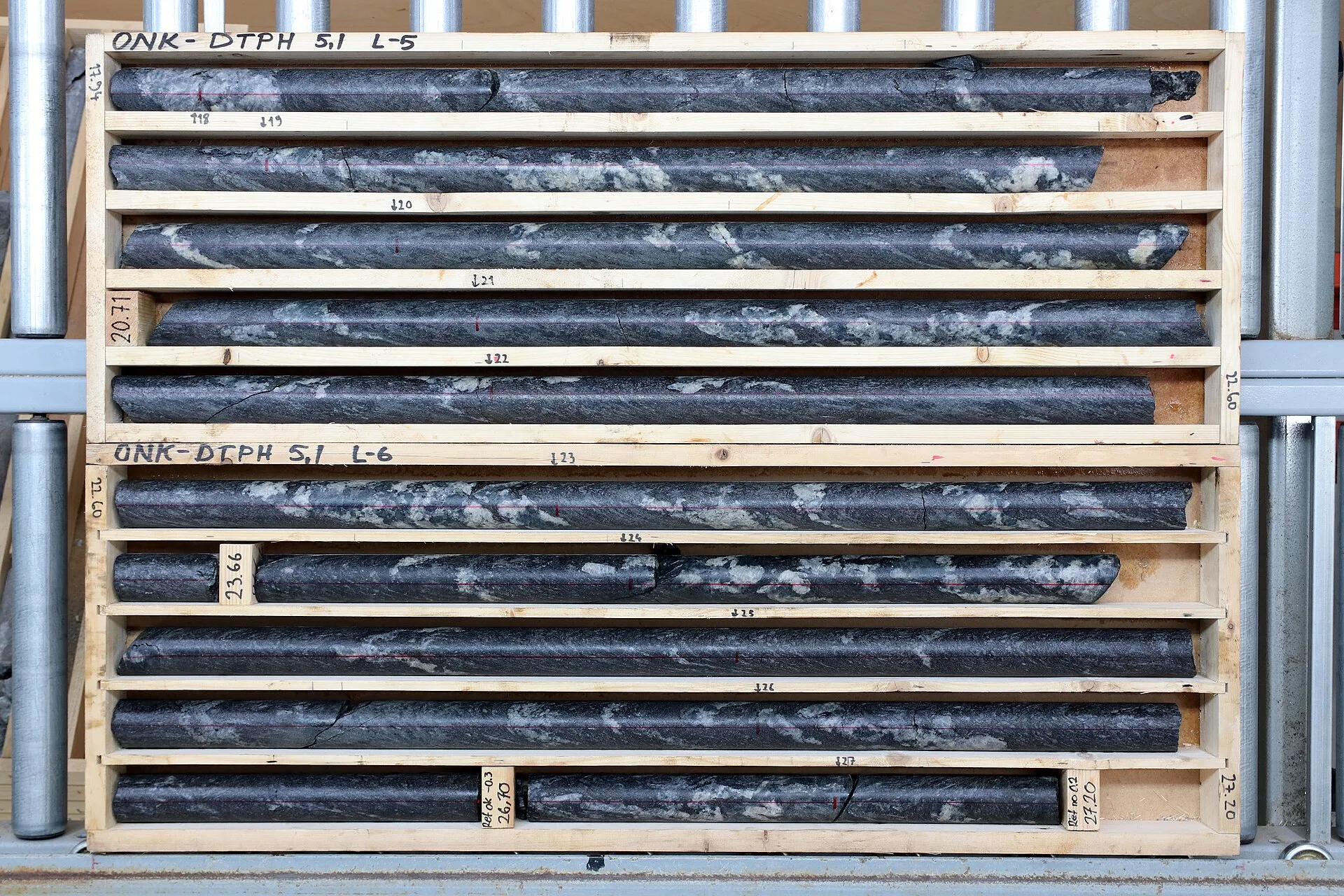
- increase, when new exploration work, such as drilling that brings rock samples up from underground, confirms more ore;
- decrease, when criteria become stricter (as in this revision) or when the product’s price falls and part of the ore is no longer viable.
So whenever you read a news story about reserves, it is worth asking: what is the source, what year is it from and what criteria were used?
What this means for Brazil
Even after the revision, Brazil remains second in the world, behind only China. The country’s challenge is not a lack of rare earths underground, but turning reserves into production and, above all, into processing within Brazil. For context, read Rare earths: what they are, what they are used for and why Brazil matters and Law 15,506/2026: what changes with Brazil’s new critical minerals policy.
Frequently asked questions
How much rare earth does Brazil have?
About 11 million metric tons of reserves, in rare earth oxides, according to the USGS (2026 edition). These are the second-largest reserves in the world.
Why was the figure once 21 million metric tons?
That was the number used in earlier editions of the statistics. The ANM revised the data using criteria aligned with international standards, and the total became about 11 million.
Did Brazil lose rare earths?
No. What changed was the way of calculating. Part of what was counted as reserves did not meet the stricter criteria.
What is the difference between a mineral resource and a mineral reserve?
A resource is a concentration of ore with reasonable prospects of eventual extraction. A reserve is the part of the resource that technical and economic studies have shown to be viable to extract.
Which country has the most rare earths?
China, with about 44 million metric tons of reserves, according to the USGS.
Found this article useful? Share it with someone who also wants to understand mining.
Share
Sources
- USGS – Mineral Commodity Summaries 2026: Rare Earths (February 2026)
- Brasil Mineral – Ainda em segundo lugar, nova estimativa traz Brasil com 15% das reservas de terras raras (Still in second place, new estimate gives Brazil 15% of rare earth reserves) (analysis by CETEM researchers, April 6, 2026)
- The Motley Fool Australia – Meteoric Resources releases Caldeira DFS (July 31, 2026)
- Meteoric Resources – announcement to the Australian Securities Exchange (ASX) on the Caldeira Project mineral resource (July 9, 2026)
Comments
No comments yet. Be the first to comment.