Deep-sea mining: what it is, where it stands, and why Brazil is watching closely
What deep-sea mining is, which minerals lie on the ocean floor, where Brazil is researching, and why the topic divides scientists, governments, and companies.
Translated from the original article in Portuguese. Read the original.
Thousands of metres below the surface, in total darkness and under extreme pressure, the ocean floor holds concentrations of copper, cobalt, zinc, gold and rare earths that may exceed known land reserves. Deep-sea mining at great depths does not yet exist as a commercial activity, but the global race for critical minerals has accelerated research and debate about when, how, and whether that extraction will happen. Brazil, with its vast Atlantic platform, sits at the centre of this discussion.
In short
- Deep-sea mining targets three types of deposit: polymetallic nodules on the abyssal plain, ferromanganese crusts on seamounts, and polymetallic massive sulphides near hydrothermal vents.
- Brazil identified new signs of hydrothermal activity on the Mid-Atlantic Ridge in October 2026, with potential for copper, zinc, gold and silver deposits.
- There is no commercial deep-sea mining anywhere in the world. The International Seabed Authority (ISA) has not approved any extraction operation.
- Brazil has 765 active mining applications in coastal zones (phosphate and potassium salt), but none for deep waters. Brazilian law does not distinguish submarine mining from land mining.
- The country supports a 10-year precautionary moratorium on mining in international waters and keeps scientific research as its priority.
What is being sought on the ocean floor
There are three main types of deep-sea mineral deposit, each with its own characteristics:
Polymetallic nodules. These are rounded concretions, 5 to 10 centimetres across, that rest on the seabed sediment at depths of 4,000 to 6,000 metres. They contain manganese, nickel, copper and cobalt. The Clarion-Clipperton Zone, in the Pacific between Hawaii and Mexico, is the most studied area: estimates from the United States Geological Survey (USGS) point to about 21.1 billion tonnes of nodules in the region.
Ferromanganese crusts. Thin layers of minerals that form on hard rocks on seamounts over millions of years. They have higher cobalt grades than nodules but are firmly bonded to the substrate, making extraction more difficult. Brazil’s main target is this type of deposit, on the submarine plateau known as the Rio Grande Rise, about 2,300 km from the coast.
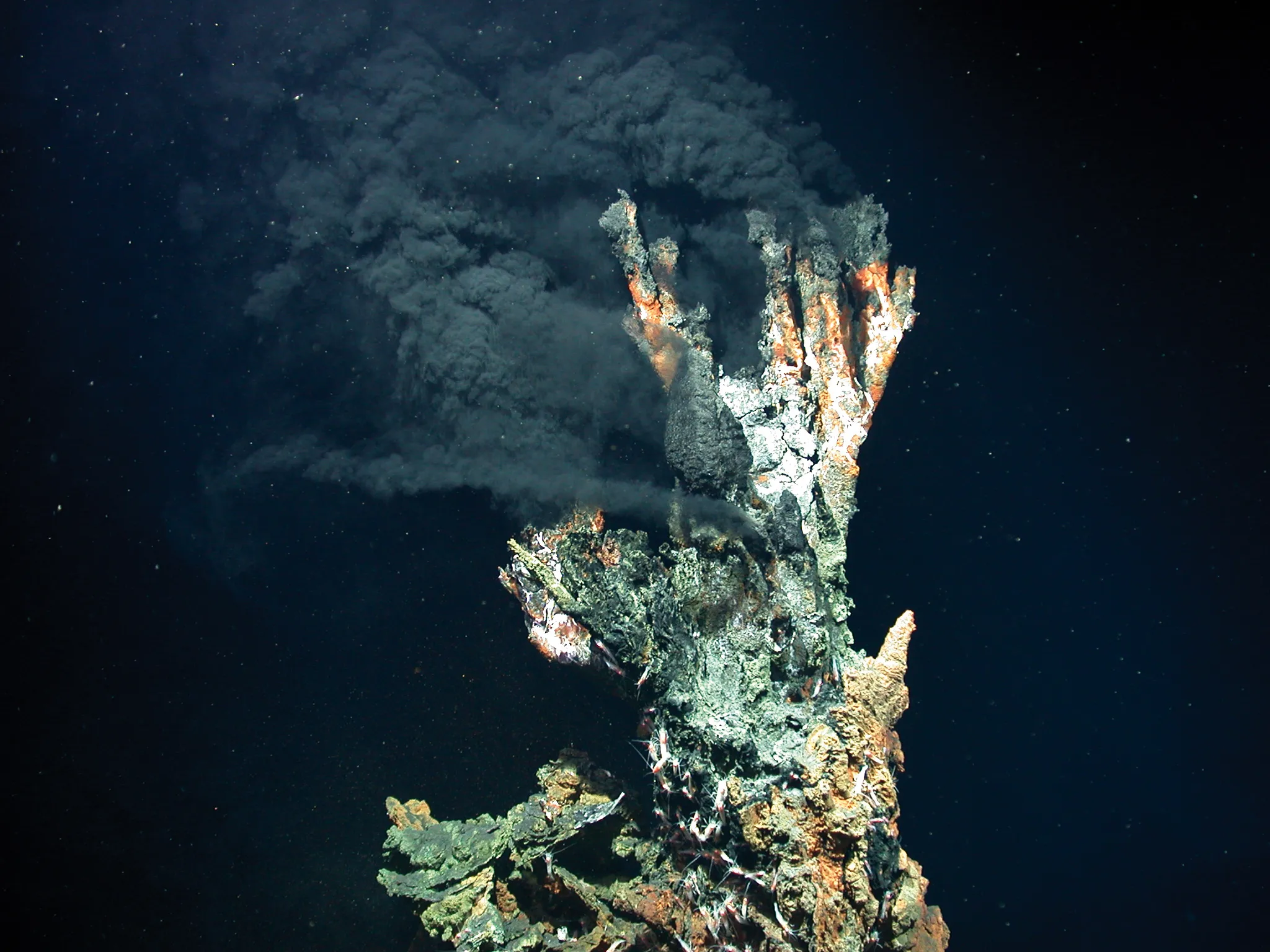
Polymetallic massive sulphides. They form near hydrothermal vents, where seawater heated by the Earth’s interior carries dissolved metals and deposits them as it cools. They are rich in copper and zinc, with concentrations of gold and silver. In October 2026, the Geological Survey of Brazil (SGB) announced the identification of new signs of hydrothermal activity on the Mid-Atlantic Ridge, north of the São Pedro and São Paulo archipelago, during the Procordilheira expedition.
How Brazil is preparing
Brazil does not operate any mine on the ocean floor and has not received formal requests for mineral research in deep-water zones, according to the National Mining Agency (ANM). What is happening are scientific surveys and applications in shallow coastal zones.
Of the 765 active mining applications in Brazilian marine zones, about 70% were filed after 2010, almost all for phosphate and potassium salt in coastal areas. None target deep waters.
The Procordilheira expedition, carried out between 9 September and 8 October 2026 aboard the research vessel Vital de Oliveira, investigated three areas of the Mid-Atlantic Ridge. Researchers found anomalies of suspended particles in the water that may indicate hydrothermal vents associated with mineral deposits. The SGB stresses that further analyses are needed to confirm hydrothermal activity and determine the mineral potential of the region.
The programme is part of PROAREA, which investigates mineral resources in ocean areas beyond national jurisdiction. The data collected may support future Brazilian applications for exploration rights with the ISA.
Why Brazil is not mining the ocean floor
There are at least four reasons why deep-sea marine mining has not yet moved beyond the planning stage in Brazil:
Lack of specific regulation. Brazilian mining law does not distinguish between land and seabed extraction. The same legal framework that governs an iron ore operation in Minas Gerais would, in theory, apply to an operation three kilometres below the Atlantic. In 2025, a deep-sea extraction request was reportedly processed without full environmental licensing, exposing this gap.
Cautious stance from IBAMA. Brazil’s federal environmental agency considers that current scientific knowledge is insufficient to evaluate deep-sea mining applications. There are no specific environmental impact assessment protocols, nor baseline ecological data on Brazilian deep-water ecosystems.
International moratorium. Brazil supports a 10-year precautionary pause on commercial mining in international waters, until robust environmental standards exist. This position is shared by other countries and scientific bodies.
Technological challenges. Extraction at great depths requires equipment capable of operating under extreme pressures, systems to transport material from the ocean floor to the surface, and complex logistics. No commercial refinery in the world has yet solved the challenge of efficiently separating the five or more minerals present in polymetallic nodules.
The global race: who is doing what
While Brazil maintains a cautious stance, other countries are advancing at different paces:
- United States. The presidential executive order of April 2025 accelerated deep-sea mining. NOAA received the first consolidated application for exploration and commercial recovery, from TMC USA, for a 65,000 km² area in the Clarion-Clipperton Zone with an estimated 619 million tonnes of nodules. In September 2026, Interior Secretary Doug Burgum stated that the first licences could be issued in the coming months.
- China. Chinese companies hold five exploration contracts linked to the ISA, for polymetallic nodules, sulphides and cobalt-rich crusts. China accounted for 71% of global rare earth mining and 87% of processing in 2024, according to the USGS.
- Japan. In February 2026, the research vessel Chikyu retrieved rare-earth-rich mud at about 5,700 metres depth near Minamitorishima Island. Full-scale extraction trials are planned for February 2027.
- Norway. Opened areas for deep-sea exploration under its jurisdiction, with conditional environmental safeguards.
Environmental risks
Deep-sea ecosystems are among the least known on the planet. Species living in these regions have adapted to stable, low-energy conditions and may take decades or centuries to recover from disturbance. The main risks identified by the scientific community include:
- Loss of deep-sea marine biodiversity, with extremely slow species recovery.
- Sediment plumes generated by extraction, which can spread for hundreds of kilometres and smother filter-feeding organisms.
- Disruption of carbon sequestration: the seabed acts as a long-term carbon reservoir, and disturbing sediments may release part of that carbon into the water column.
- Mobilisation of toxic metals: polymetallic nodules contain elevated concentrations of cadmium, lead and mercury, which can be released into the water.
- Noise pollution: industrial equipment at depth generates sound that interferes with marine fauna communication and navigation.
IBAMA and environmental authorities in several countries consider that these risks, combined and poorly understood, justify the precautionary stance.
What happens next
In Brazil, the results of the Procordilheira expedition will guide future scientific campaigns. The question of whether the country will or will not authorise deep-sea mining depends on a sequence of decisions: approval (or not) of the Brazilian claim to extend the Exclusive Economic Zone to include the Rio Grande Rise, the creation of a specific regulatory framework for submarine mining, and the definition of environmental protocols by the ISA.
Meanwhile, scientific research remains the priority. As the SGB’s Director of Geology and Mineral Resources, Francisco Valdir Silveira, told CNN Brasil: “Our mission is first to know, to explore in the deepest sense of the word, as the explorers did.”
Frequently asked questions
Is there commercial deep-sea mining anywhere in the world?
No. As of October 2026, no commercial deep-sea mineral extraction operation has been authorised by the ISA or by any country. There are only research contracts and, in the United States, licence applications under review.
What minerals are found on the ocean floor?
The main ones are copper, zinc, nickel, cobalt, manganese, gold and silver, present in three types of deposit: polymetallic nodules, ferromanganese crusts, and polymetallic massive sulphides. In some regions, such as near Japan’s Minamitorishima Island, there is also rare-earth-rich mud.
Does Brazil already have marine mining applications?
Yes, but only in shallow coastal waters. There are 765 active applications, mostly for phosphate and potassium salt. No application has been made for deep waters. Brazil is conducting scientific research on the Mid-Atlantic Ridge and the Rio Grande Rise.
What is Brazil’s position on deep-sea mining?
Brazil supports a 10-year precautionary moratorium on commercial mining in international waters and maintains scientific research as its priority. IBAMA considers current knowledge insufficient to evaluate deep-sea extraction applications, and Brazilian legislation has no specific rules for submarine mining.
How long will it take for deep-sea mining to happen?
It is difficult to predict. Scenarios range from the creation of robust regulation with commercial activity in the early 2030s to the indefinite maintenance of the research phase. Everything depends on the pace of the ISA, national decisions on regulation, and the evolution of deep extraction technology.
Found this article useful? Share it with someone who also wants to understand mining.
Share
Sources
- CNN Brasil – Brazil finds new signs of critical minerals on the Atlantic floor (23/10/2026)
- Discovery Alert – Brazil's Deep-Sea Mining Plan: Risks & Regulations (2026)
- A&O Shearman – Deep sea mining in 2026: regulation, geopolitics and the race for critical minerals (2026)
- CPG Click Petróleo e Gás – US and China take critical minerals race to the ocean floor (24/10/2026)
- Gazeta do Povo – US and China take critical minerals and rare earths race to the ocean floor (24/10/2026)
- SGB – Geological Survey of Brazil (Procordilheira expedition, 2026)
Comments
No comments yet. Be the first to comment.