The Caldeira Project in Poços de Caldas: what the Lynas takeover means
Australia's Lynas agreed to buy Meteoric, owner of the Caldeira rare earth project in Poços de Caldas, Brazil. The deal and what is still pending.
Translated from the original article in Portuguese. Read the original.
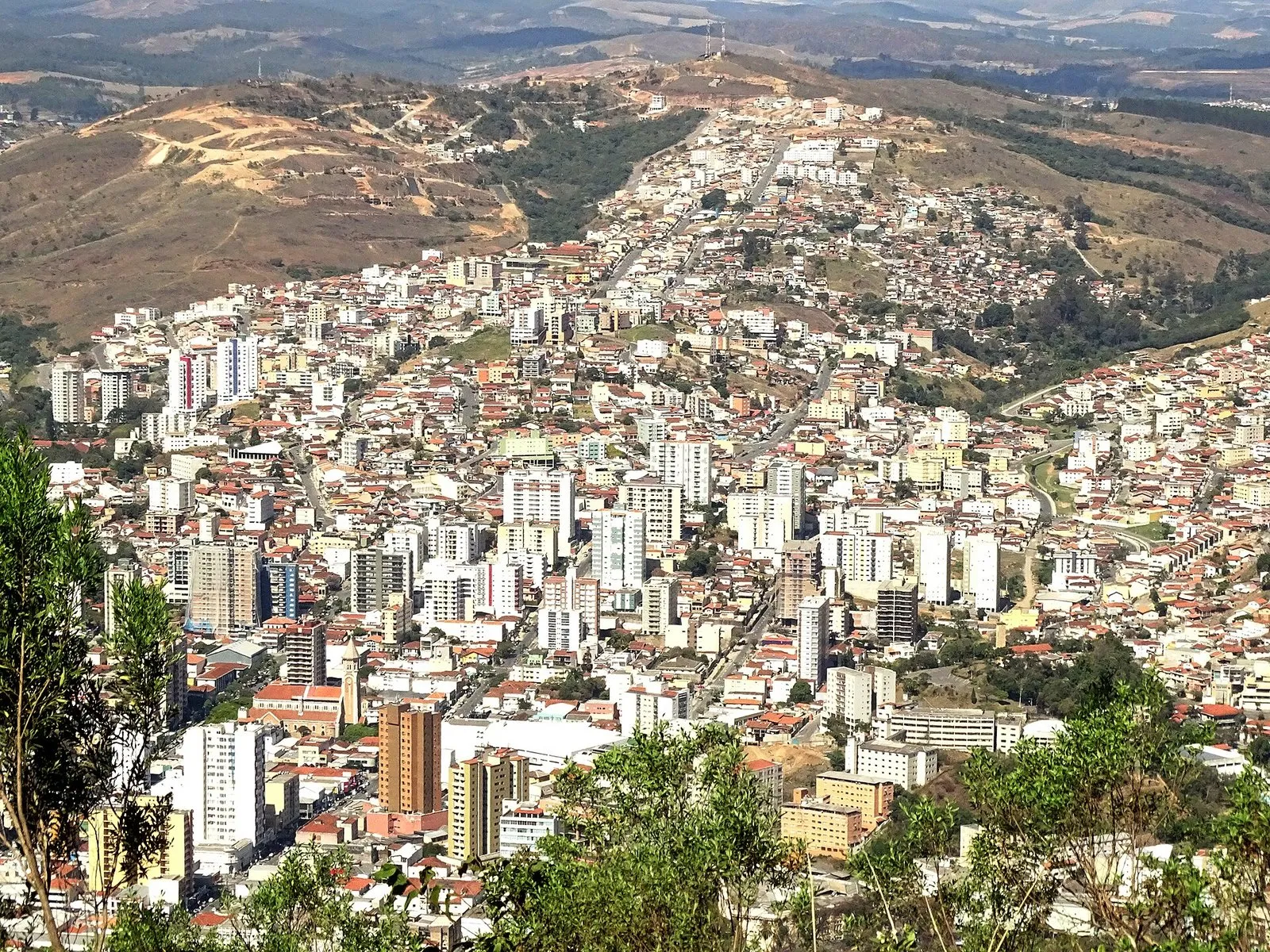
The Caldeira Project, an ionic clay rare earth project near Poços de Caldas, in the south of Minas Gerais, a state in southeastern Brazil, will change hands if the deal is approved. On October 1, 2026, Australia’s Lynas Rare Earths announced an agreement to buy 100% of Meteoric Resources, the company developing the project. Below, we explain what was agreed, why it matters, the points in favor and the points of concern, and what still has to happen.
What happened
According to the two companies’ joint announcement to the Australian Securities Exchange (ASX), the purchase will be made through a scheme of arrangement approved by an Australian court, paid in shares only: each Meteoric share will be exchanged for 0.0207 new Lynas shares. There is no cash payment to shareholders.
How much is the deal worth?
The official figure is 968 million Australian dollars (A$ 968 million). The companies calculated it based on Lynas’s average share price over the 60 days before September 30, 2026 (A$ 15.29) and on the total number of Meteoric shares, including rights and options.
In the press, the same value appeared in other forms:
| How it was reported | What it is |
|---|---|
| A$ 968 million | Value in the companies’ official announcement |
| About US$ 672 million | The same value converted into U.S. dollars |
| About R$ 3.5 billion | The same value converted into Brazilian reais (InvestNews) |
In other words, these are not three different deals: it is a single figure in three currencies. Because payment is in shares, the final value also depends on what Lynas’s shares are worth on the day of completion.
In addition, Lynas will lend Meteoric up to A$ 110 million, unsecured, to keep the project moving while the deal is pending. The first tranche, of A$ 35 million, is available right after signing.
The project in numbers
According to Meteoric, Caldeira has:
- 77 mining and exploration licenses, totaling more than 18,000 hectares across Caldas, Poços de Caldas and Andrades, about 254 km from São Paulo;
- a mineral resource of about 1.6 billion tonnes and a reserve of 151 million tonnes, with an average grade of 3,524 ppm of rare earth oxides. The difference between a resource and a reserve is explained in How much rare earth does Brazil have? Why the numbers change;
- a definitive feasibility study (DFS) published on July 31, 2026, with an estimated initial investment of US$ 498 million, an initial mine life of more than 20 years and processing of 6 million tonnes of ore per year;
- expected average production of 3,862 tonnes per year of NdPr (neodymium and praseodymium, used in permanent magnets) and 127 tonnes per year of DyTb (dysprosium and terbium, the heavy rare earths that make magnets heat-resistant).
The planned product is a mixed rare earth carbonate: a concentrate in which the elements are still mixed. Separating each element is a later step.
Why it matters
Lynas is no ordinary buyer. It describes itself as the only commercial producer of separated light and heavy rare earth oxides outside China. The company mines ore at Mt Weld, in Australia, and separates the elements at a plant in Kuantan, Malaysia. Morningstar, an investment research firm, describes it as the largest rare earth producer outside China.
For Brazil, the purchase brings into the country a company with experience in exactly the stage that is missing there: separation, where much of the value lies. To understand why this stage is so contested, read Rare earths: what they are, what they are used for and why Brazil matters.
But separation in Brazil has not been decided yet. The official announcement says only that Lynas “will carry out studies” on further processing in Brazil and also mentions the possibility of integrating Caldeira with its Malaysian operations. According to the news site O Fator, Brazil’s Minister of Mines and Energy, Alexandre Silveira, said Lynas executives had told him the company plans a separation plant in the Poços de Caldas region. On a call with investors the same day, however, Lynas’s Vice President of Strategy, Daniel Havas, stopped short of confirming it: “Nothing is defined in an unchangeable way.”
Then there is BNDES, Brazil’s national development bank. In the announcement, Meteoric’s executive chairman, Andrew Tunks, said Lynas had spoken directly with the federal government and with the bank “to ensure there is no delay” to the project. According to O Fator, Havas mentioned BNDES’s interest in possibly financing an industrial plant for the company in Brazil.
Pros and cons
Points in favor
- Money and experience. Lynas had A$ 1.2 billion in cash and short-term investments in June 2026, according to the announcement, and has run a complete rare earth chain for years.
- A project already studied. The DFS, the preliminary license and the pilot plant reduce technical uncertainty.
- No tailings dam. According to Meteoric, the processed clay will be dry-stacked and returned to the pits already mined. In the pilot plant tests, about 85% of the water was recovered.
- Jobs. The company estimates about 1,200 jobs during construction and 520 permanent jobs in operation.
Points of concern
- Foreign control. The project would pass to an Australian company. According to the companies’ announcement, the change of control requires approval from the council created by Law 15,506/2026.
- Uncertain separation. Without a plant in Brazil, the country would export the concentrate and the value of the next stage would stay abroad.
- Water and a protected area. During licensing, the main questions were about the region’s mineral water aquifers, according to O Fator. Brazil’s Federal Public Prosecutor’s Office (MPF) also pointed to an overlap with the Pedra Branca Environmental Protection Area (APA), in Caldas. Meteoric says no activity is planned inside the APA, only in the 3 km band around it, where mining is allowed.
- Nuclear neighbor. Caldas is home to the Caldas Decommissioning Unit of Indústrias Nucleares do Brasil (INB), a former uranium facility with radioactive waste. In November 2025, the MPF requested studies on the risk of the process capturing thorium and uranium and called for prior consultation with Indigenous and quilombola communities in the region (quilombolas are Afro-Brazilian communities descended from people who escaped slavery). Meteoric responds that the National Nuclear Safety Authority (ANSN) confirmed, in 2025 letters, that the project poses no radiological risk and does not interfere with the INB unit, and that the Indigenous communities are more than 8 km away and should not be affected.
The decision on the pilot plant
In Poços de Caldas, Meteoric runs a laboratory and a pilot plant that started operating at the end of 2025 and turns clay into mixed rare earth carbonate. On August 31, 2026, the ANSN informed the company that the unit is exempt from radiological regulatory control. According to Diário do Comércio, the decision came after an inspection on June 16 and was based on ANSN Standard 4.01: all samples were below 10 Bq/g (becquerels per gram, the measure of radioactive activity). The ANSN said the classification will be revisited in the project’s next phases.
What happens now?
The deal still depends on several steps, according to the October 1 announcement:
- An independent expert’s report stating that the sale is in the best interest of Meteoric shareholders.
- Approval from the National Council for the Industrialization of Critical and Strategic Minerals, created by Law 15,506/2026, for the change of control.
- A Meteoric shareholder meeting, scheduled for January 2027. It requires 75% of the votes and a majority of the shareholders present. Meteoric’s board recommends voting yes, and the largest shareholder, with about 6.7%, has declared its support.
- Approval from the Australian court.
The document with the details should reach shareholders in December 2026, and completion is expected by March 2027. The companies themselves say these dates are indicative.
Meanwhile, licensing continues. The preliminary license (LP), the first environmental license in the Brazilian process, was unanimously approved by the Mining Chamber of Copam, Minas Gerais’s state environmental policy council, on December 19, 2025, after a session of about nine hours. The application for the installation license (LI), which authorizes construction, was filed in 2026, and Meteoric expects a decision in the last quarter of 2026. As of this writing, we have not found any announcement that the LI has been granted. After it come the final investment decision, about 24 months of construction and the operating license.
The deadline with Togni, the company that holds the mineral rights and assigned the rare earth exploitation to Meteoric, has also changed. The deadline to start production moved from April 2031 to April 2033.
To understand why projects like this one have gained so much space in the debate, read Why is everyone talking about rare earths?. MineraMente will follow the next steps.
Found this article useful? Share it with someone who also wants to understand mining.
Share
Sources
- Lynas Rare Earths and Meteoric Resources – Lynas Rare Earths to acquire Meteoric Resources, joint announcement to the ASX (October 1, 2026)
- Meteoric Resources – Caldeira DFS Confirms Confidence in Project Fundamentals, announcement to the ASX (July 31, 2026)
- Meteoric Resources – Preliminary Environmental License Approved Without Restriction, announcement to the ASX (December 22, 2025)
- Meteoric Resources – Caldeira Project Licensing Update, announcement to the ASX (June 18, 2026)
- Meteoric Resources – Half-year financial report to June 30, 2026 (September 2026)
- Lynas Rare Earths – About us
- Morningstar – ASX rare earths play looks to expand production (October 2026)
- InvestNews – Australiana Lynas compra mineradora por R$ 3,5 bilhões e entra no mercado de terras raras do Brasil (Australia's Lynas buys a mining company for R$ 3.5 billion and enters Brazil's rare earth market) (October 1, 2026)
- O Fator – O que a Lynas diz sobre planos de separar terras raras no Brasil (What Lynas says about plans to separate rare earths in Brazil) (October 1, 2026)
- O Fator – Órgão nuclear da União isenta planta de terras raras em Poços de Caldas de controle regulatório (Federal nuclear agency exempts rare earth plant in Poços de Caldas from regulatory control) (September 3, 2026)
- Diário do Comércio – ANSN isenta planta piloto de terras raras da Meteoric de controle regulatório (ANSN exempts Meteoric's rare earth pilot plant from regulatory control) (September 4, 2026)
- O Fator – Copam aprova licença prévia para projetos de terras raras da Viridis e da Meteoric no Sul de Minas (Copam approves preliminary license for Viridis and Meteoric rare earth projects in southern Minas Gerais) (December 19, 2025)
- Federal Public Prosecutor's Office in Minas Gerais (MPF) – MPF recomenda a retirada de pauta de votação de processos de licenciamento sobre terras raras em MG (MPF recommends removing rare earth licensing cases from the voting agenda in Minas Gerais) (November 25, 2025)
Comments
No comments yet. Be the first to comment.