Mining in everyday life: what comes from mines and is in your home
From the cement in your walls to the phone in your pocket: which minerals are in your home, kitchen, car and food, with data and sources.
Translated from the original article in Portuguese. Read the original.
Mining in everyday life is closer than it seems. The cement in your walls, the glass in your windows, the soda can, the fertilizer that helped grow your beans and the battery in your phone all depend on something that came out of a mine, a quarry or a salt works. This guide walks through the house, room by room, and shows which minerals are in each object and what they are used for.
In short
- In construction, minerals show up in huge volumes: crushed stone, sand, limestone, clay and gypsum become concrete, bricks, floors and plaster.
- In the kitchen you find salt, glass (made from silica sand and other minerals), the aluminum in cans and the steel in appliances.
- Food depends on fertilizers made with phosphate and potassium, and Brazil imports most of what it uses.
- A cell phone brings together dozens of mineral raw materials: copper, tin, lithium, graphite, tantalum, rare earths and others.
- Recycling reduces the need to mine, but does not eliminate it.
Why does so much come from mines?
Almost every object is made from raw materials that were grown (like wood and cotton), derived from oil (like many plastics) or extracted from rocks and minerals. That third group is mining. It includes metals, such as iron, copper and aluminum, and also the so-called industrial minerals, such as sand, limestone, clay, gypsum, salt and talc, which almost never make the news but are everywhere.
A note about the numbers in this text: much of the detailed usage data comes from the U.S. Geological Survey (USGS), which publishes a mineral-by-mineral survey every year. The percentages reflect the U.S. market in 2025 and are meant to show what each mineral is used for. In Brazil, the proportions may be different.
In the structure of the house
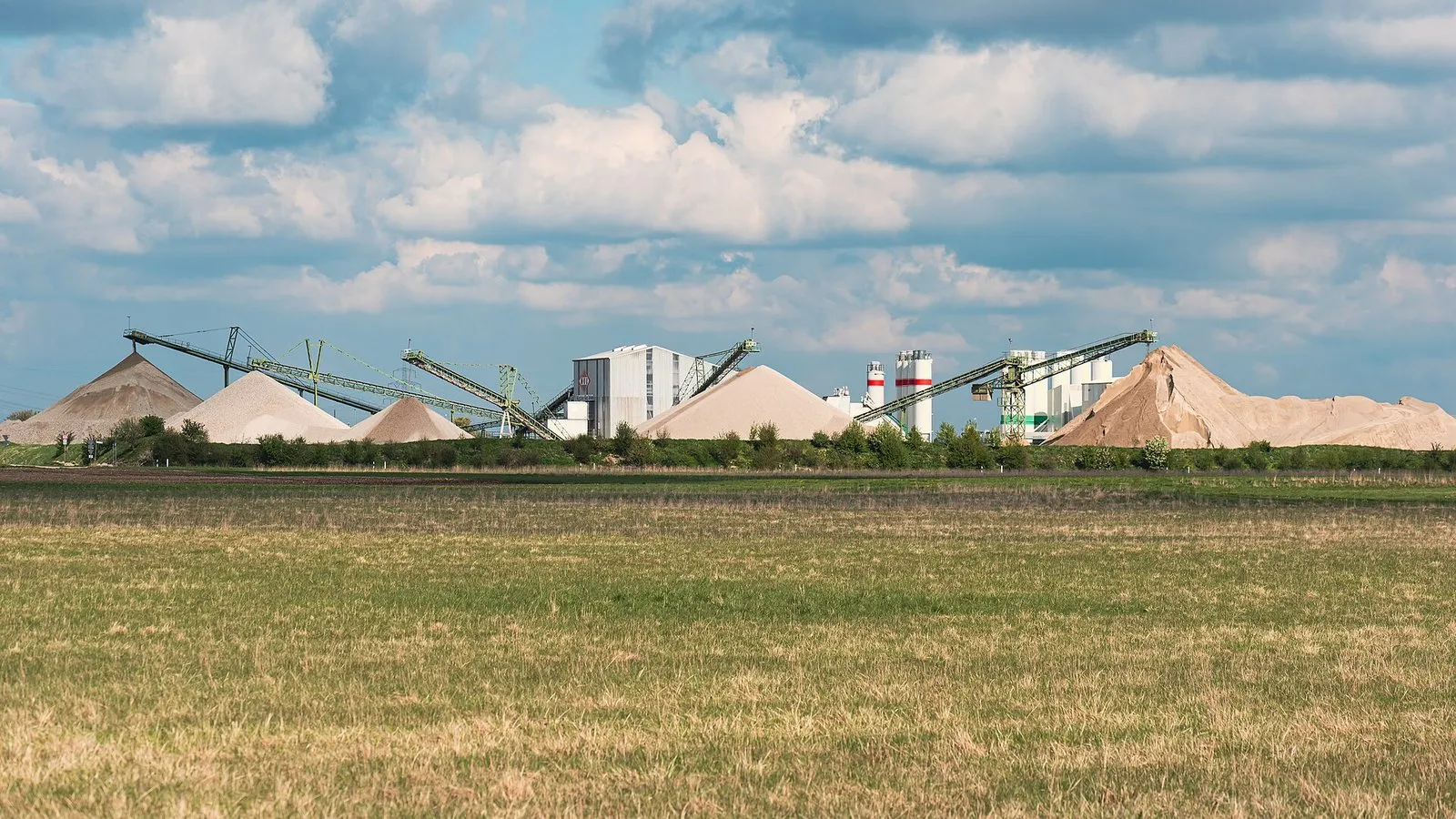
Concrete is a mixture of cement, water, sand and crushed stone. All of the solid ingredients come from mining:
- Crushed stone: according to the USGS, about 70% of the crushed stone produced in the United States in 2025 was limestone and dolomite. Of the total, 72% was used as construction aggregate, mainly in roads, and 17% in cement manufacturing.
- Sand and gravel: about 42% of U.S. construction sand and gravel became aggregate for concrete.
- Gypsum: it is used in cement manufacturing, in drywall panels and in plaster. The USGS states that gypsum has “no practical substitute” in the manufacture of portland cement.
- Clay: common clay goes into bricks (43% of use in the U.S.), and a type called ball clay goes mostly into floor and wall tiles.
- Feldspar: it is used to make flat glass, ceramic tiles and sanitaryware, such as sinks and toilets.
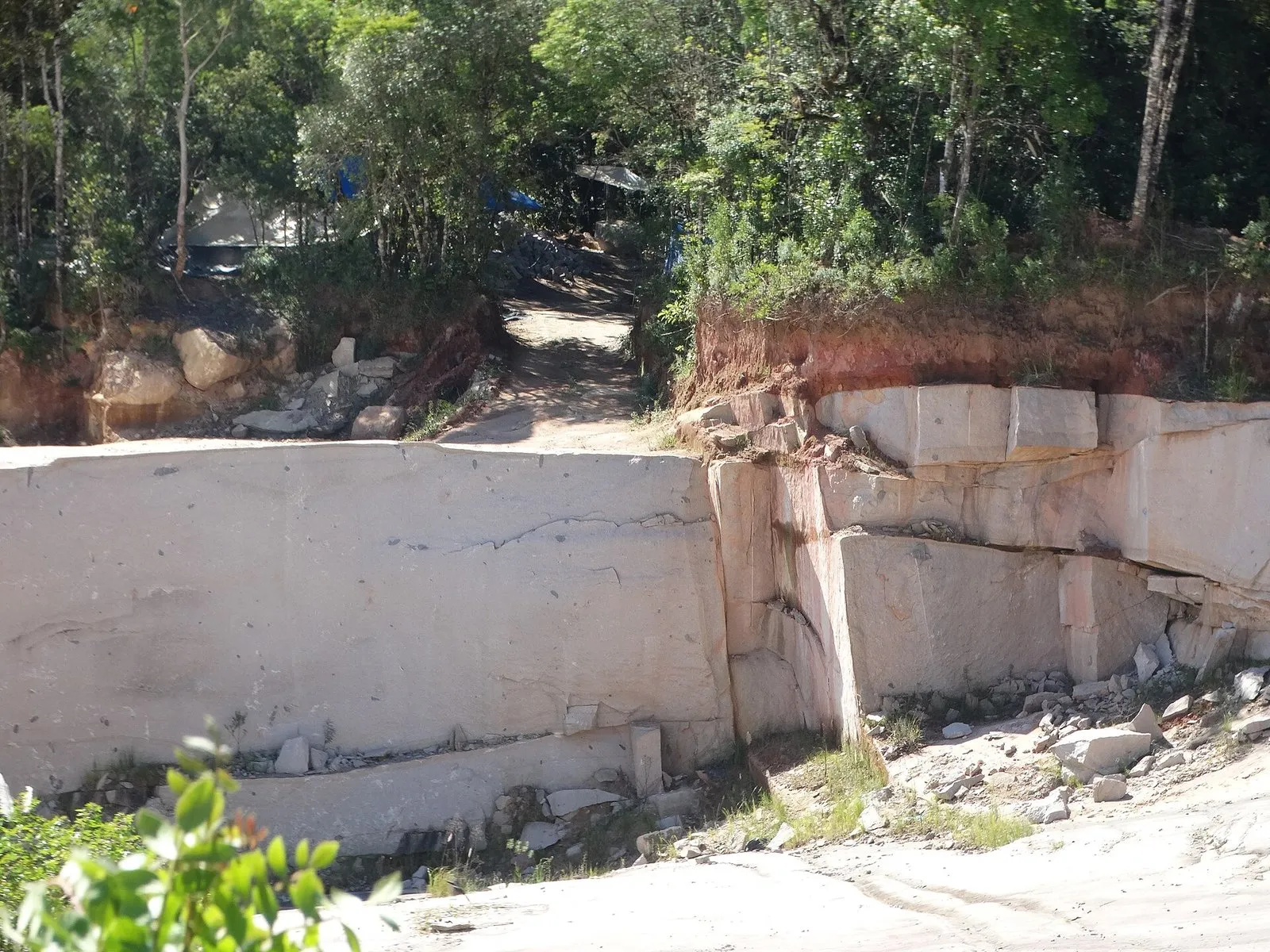
In Brazil, these materials also carry a lot of weight. In April 2026, the director-general of the National Mining Agency (ANM, Brazil’s mining regulator), Mauro Sousa, said, according to Agência iNFRA, that the country trades a larger volume of aggregates such as sand, crushed stone and clay, in tonnes, than of iron ore, although with a much lower commercial value. Each of them is covered in Minerals in construction: sand, crushed stone, limestone and more. To understand how a quarry or a mine gets off the ground, read How a mine works: from discovery to closure.
In the kitchen
| Object | Mineral or ore | What it is used for |
|---|---|---|
| Table salt | Rock salt or sea salt | Seasoning and food preservation |
| Glasses, jars and glass bottles | Silica sand, soda ash (sodium carbonate) and feldspar | Raw material for glass |
| Cans and aluminum foil | Bauxite | Ore from which aluminum is obtained |
| Refrigerator, stove and cutlery | Iron ore, zinc and nickel | Steel, galvanized steel and stainless steel |
| Plates and tiles | Clay, kaolin and feldspar | Ceramics |
A few details, according to the USGS: in the United States, 45% of soda ash went into glassmaking in 2025, and packaging accounted for 24% of aluminum consumption. Salt has uses well beyond the table: the chemical industry, which produces chlorine and caustic soda, took about 42% of U.S. sales, and road deicing took 37%.
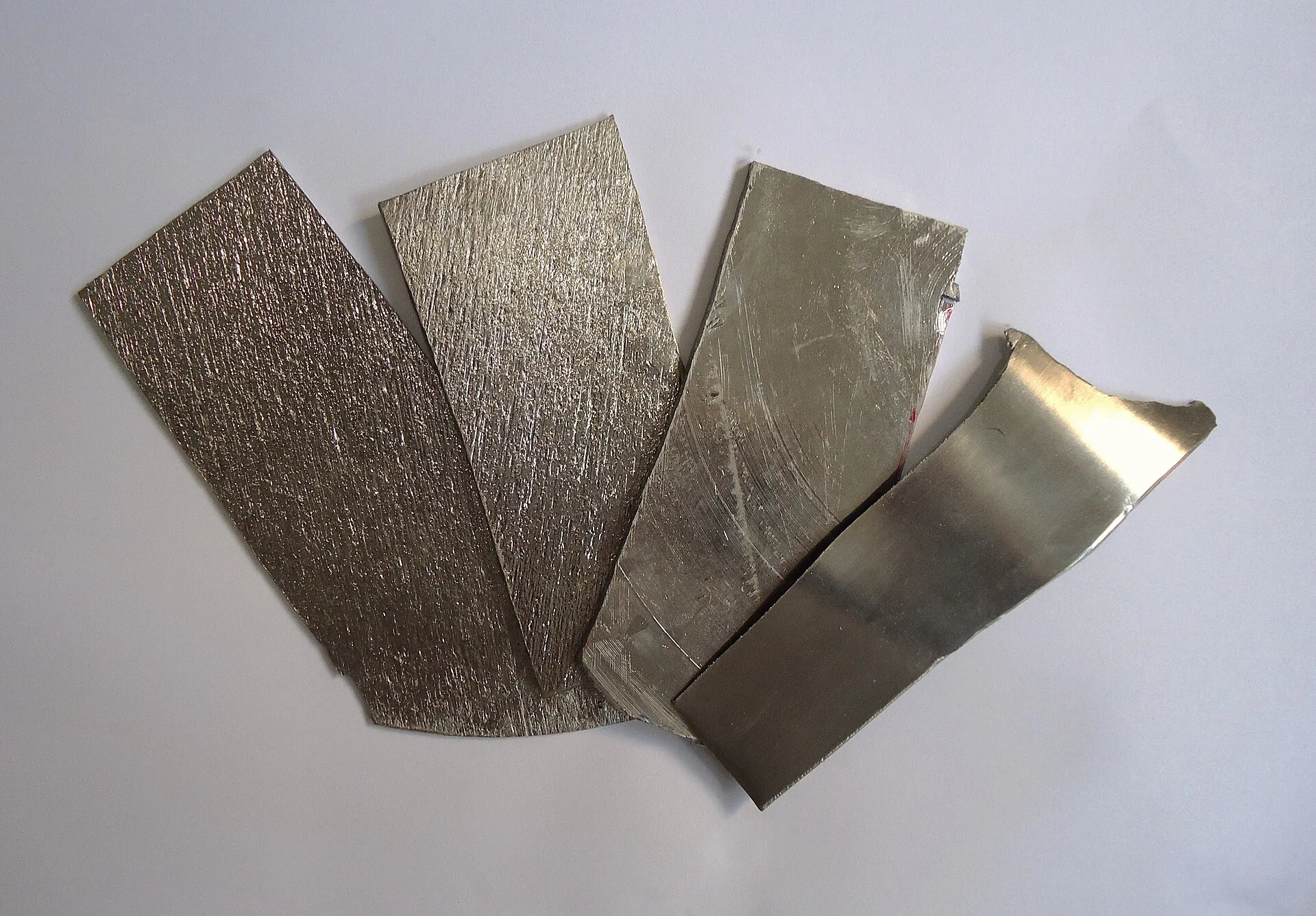
Steel starts with iron ore. The USGS points out that the only source of primary iron is iron ore, and that 98% of the ore produced in the U.S. went to the steel industry. Zinc is used mainly to galvanize steel, a coating that protects against rust, and nickel goes mostly into stainless steel and other alloys.
On your plate: fertilizers
Perhaps the most important link between mining and everyday life is food. Plants need nitrogen, phosphorus and potassium. The last two usually come from mines:
- Phosphorus: more than 95% of the phosphate rock mined in the U.S. became phosphoric acid, used to make fertilizers and animal feed supplements.
- Potassium: about 85% of potash sales in the U.S. went to the fertilizer industry.
Brazil is a major agricultural producer, but it depends heavily on imported fertilizers. According to the National Fertilizer Plan, launched by the Brazilian federal government in 2022 with data from the National Association for the Distribution of Fertilizers (Anda, an industry body), more than 80% of the fertilizers consumed in Brazil in 2020 came from abroad. For potassium, external dependence reached 96.4% that year, and Brazil is the world’s second-largest consumer of this nutrient, behind China. The plan cites the Taquari-Vassouras mine, in Sergipe, a state in northeastern Brazil, as the country’s only potash production site. Learn more in The minerals that feed agriculture: potassium, phosphate and limestone.
In your cell phone
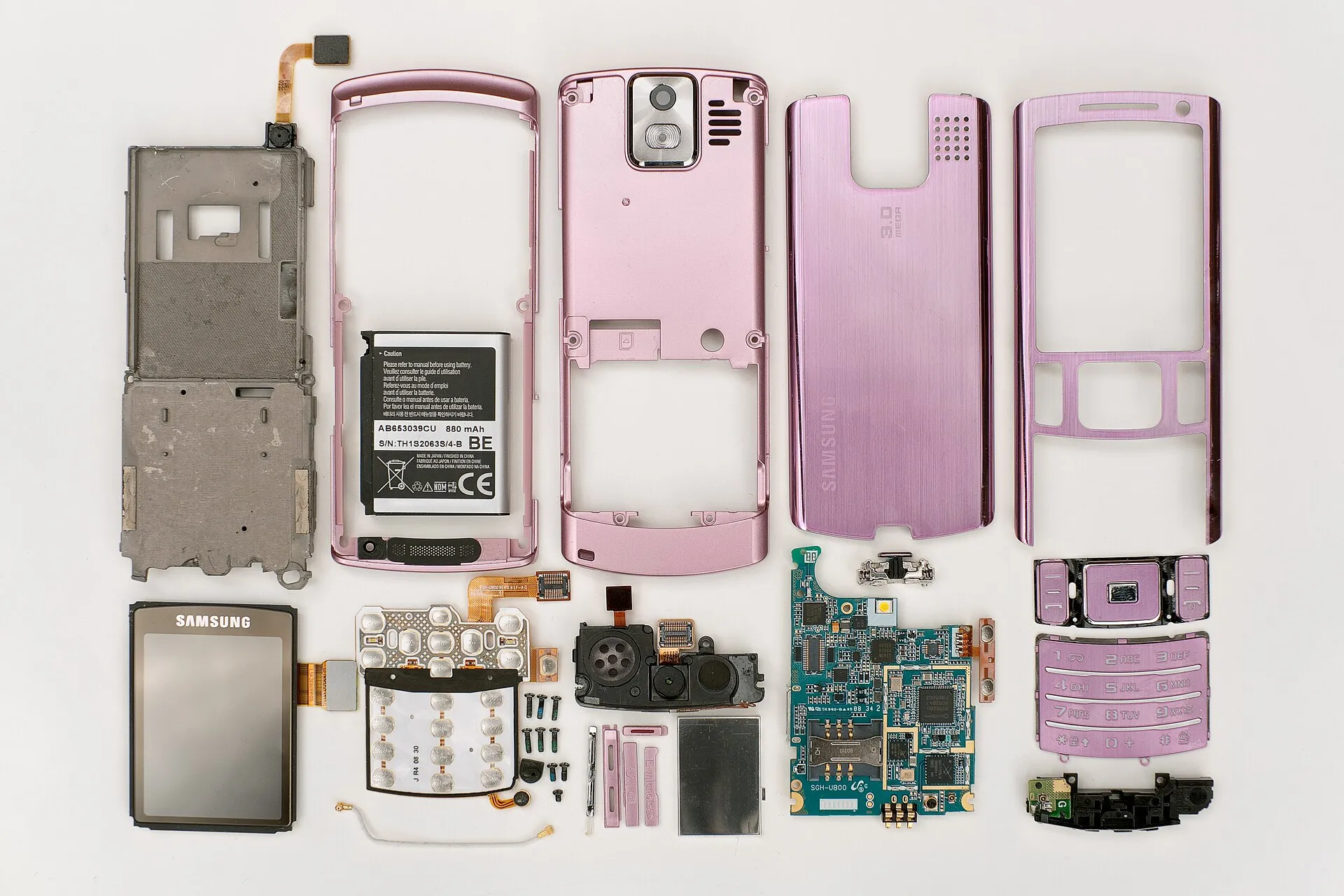
A cell phone is a small collection of minerals. According to the USGS, more than half of the components of a mobile device, including the electronics, screen, battery and speakers, are made of mined or semi-processed materials.
| Part of the phone | Mineral or element | Function |
|---|---|---|
| Screen | Silica, potassium, indium and tin | Strong glass and transparent circuits |
| Circuits | Copper, silver, silicon and tin | Conducting electricity and soldering components |
| Screen light | Gallium (obtained during aluminum production from bauxite) | LEDs |
| Capacitors | Tantalum | Storing electric charge |
| Vibration | Tungsten | Adding weight to the vibration motor |
| Battery | Lithium and graphite | Battery cathode and anode |
| Speaker and microphone | Rare earths | Magnets |
Copper is the metal present in the largest quantity in the device. And Brazil is on the map: in 2014, according to the USGS, the country was among the world’s leading sources of tantalum. To learn more about magnets, read Rare earths: what they are, what they are used for and why Brazil imports them.
In the garage
Cars are full of mining too. In the U.S., the transportation sector accounted for 36% of aluminum consumption and 18% of the use of copper and copper alloys (the latter according to data from the Copper Development Association, an industry body, cited by the USGS). Talc goes into ceramics, including automotive catalytic converters, and natural graphite shows up in brake linings.
In electric cars, the battery enters the picture. According to the USGS, batteries accounted for about 88% of global lithium use in 2025, and lithium-ion batteries are the main use of cobalt worldwide.
In other corners of the house
- Wall paint: titanium dioxide is a white pigment, and its main uses are paints, plastics and paper.
- Paper and magazines: kaolin, a white clay, is used as a coating and filler in paper.
- Plastics: the largest use of talc in the U.S. (36%) was in plastics.
- Cat litter: almost half of U.S. bentonite (48%) became absorbent for pet waste.
And the other side of the ledger?
All of this has a cost. Extracting minerals opens pits, generates tailings and can affect rivers and neighboring communities. That is why the useful question is not whether we need mining, but how it is done, regulated and closed. Also read Mining myths and facts: what is exaggeration and what is real.
Recycling helps. In 2025, aluminum recovered from old scrap was equivalent to about 28% of apparent consumption in the U.S., and recycled glass reduces the use of feldspar in container factories. But recycling does not cover all the demand, which keeps growing, especially for batteries.
Frequently asked questions
Which minerals are inside a house?
The main ones are construction minerals: limestone (in cement), sand, crushed stone, clay, gypsum and feldspar. In the kitchen there are salt, glass, aluminum and steel. Paints, paper and plastics contain titanium dioxide, kaolin and talc.
Which minerals are in a cell phone?
According to the USGS, a cell phone uses copper, silicon, tin, indium, gallium, tantalum, tungsten, lithium, graphite, silver and rare earths, among others. More than half of its components are made of mined or semi-processed materials.
Does food depend on mining?
Yes. Phosphorus and potassium fertilizers are made from minerals extracted from mines. According to Brazil’s National Fertilizer Plan, the country imported more than 80% of the fertilizers it consumed in 2020.
What is the most used mineral in everyday life?
By volume, construction aggregates, such as crushed stone and sand, are among the leaders. In Brazil, according to the director-general of the ANM, they are traded in larger quantities, in tonnes, than iron ore.
Does recycling remove the need to mine?
It reduces it, but does not solve it. In the U.S., aluminum recovered from old scrap was equivalent to about 28% of consumption in 2025. The rest had to come from other sources, such as production from ore.
Found this article useful? Share it with someone who also wants to understand mining.
Share
Sources
- USGS – A World of Minerals in Your Mobile Device (General Information Product 167, September 2016)
- USGS – Mineral Commodity Summaries 2026: Stone (Crushed)
- USGS – Mineral Commodity Summaries 2026: Sand and Gravel (Construction)
- USGS – Mineral Commodity Summaries 2026: Gypsum
- USGS – Mineral Commodity Summaries 2026: Clays
- USGS – Mineral Commodity Summaries 2026: Feldspar and Nepheline Syenite
- USGS – Mineral Commodity Summaries 2026: Soda Ash
- USGS – Mineral Commodity Summaries 2026: Salt
- USGS – Mineral Commodity Summaries 2026: Aluminum
- USGS – Mineral Commodity Summaries 2026: Iron Ore
- USGS – Mineral Commodity Summaries 2026: Zinc
- USGS – Mineral Commodity Summaries 2026: Nickel
- USGS – Mineral Commodity Summaries 2026: Copper
- USGS – Mineral Commodity Summaries 2026: Lithium
- USGS – Mineral Commodity Summaries 2026: Cobalt
- USGS – Mineral Commodity Summaries 2026: Graphite (Natural)
- USGS – Mineral Commodity Summaries 2026: Talc and Pyrophyllite
- USGS – Mineral Commodity Summaries 2026: Titanium and Titanium Dioxide
- USGS – Mineral Commodity Summaries 2026: Phosphate Rock
- USGS – Mineral Commodity Summaries 2026: Potash
- Brazilian Federal Government (SAE) – Plano Nacional de Fertilizantes 2050 (National Fertilizer Plan, March 2022)
- Agência iNFRA – ANM defende desburocratização no tratamento de minerais da construção civil (ANM calls for less red tape for construction minerals, April 14, 2026)
Comments
No comments yet. Be the first to comment.