Serra Verde: how the rare earth mine in Goiás, Brazil, works
How Serra Verde's Pela Ema mine in Minaçu, Brazil, works: ionic clay, mining, concentrate, output, the sale to USA Rare Earth and licensing.
Translated from the original article in Portuguese. Read the original.
The only rare earth mine in commercial production in Brazil is in Minaçu, in northern Goiás, a state in central Brazil. It is the Pela Ema mine, run by the company Serra Verde, which extracts rare earths from a soft clay, without explosives, and sells a concentrate with the elements still mixed together. Since September 3, 2026, Serra Verde has belonged to the American company USA Rare Earth, and the first phase’s output already has a buyer: a vehicle financed by the United States government.
In short
- The mine is about 30 km from Minaçu, Goiás, and works an ionic clay deposit formed by the decomposition of a granite.
- Mining is open-pit and shallow, with no explosives or grinding. A salt solution releases the rare earths, and the product is a mixed rare earth carbonate.
- Production began in January 2024, but is still small: 150 tonnes of oxides in 2024 and 40 in 2025. The goal is a rate of 4,000 tonnes per year by the end of 2026 and, later, 6,400.
- USA Rare Earth bought Serra Verde for about US$ 2.8 billion. The offtake contract guarantees minimum prices.
- Licensing is done at the state level (by Semad-GO, the Goiás state environment secretariat), which is challenged by those who argue it should be federal.
Where the mine is
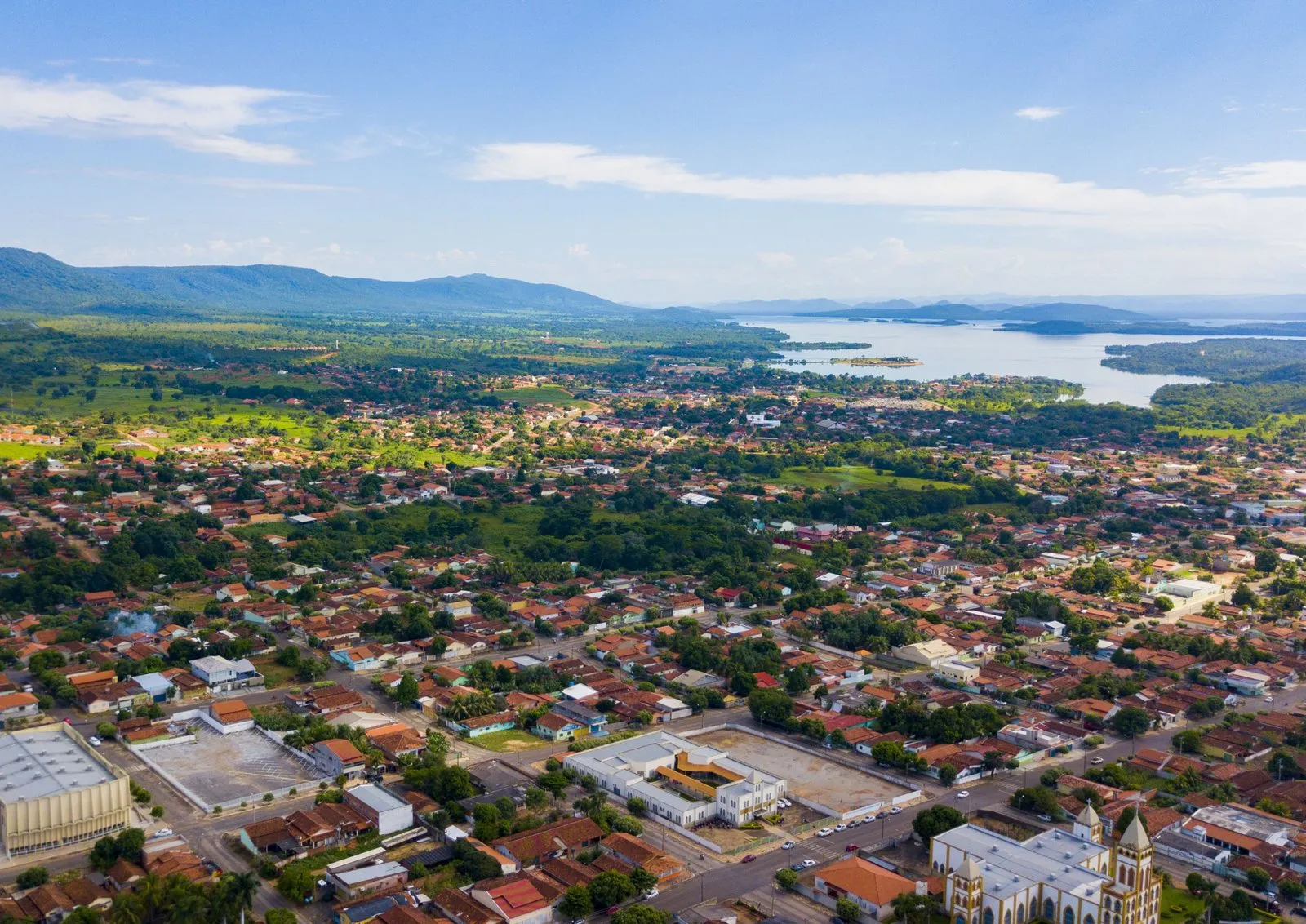
According to the company, the mine is about 30 kilometers west-northwest of the town of Minaçu. The authorized directly affected area totals 4,362 hectares, surrounded mostly by rural properties with pasture. The product travels by truck to the Port of Santos, in São Paulo state.
Minaçu, 382 kilometers from Brasília, Brazil’s capital, grew up because of asbestos mining, which Brazil’s Supreme Federal Court banned in the country in 2017, Agência Pública recalls. That is why rare earths were welcomed in the town as a fresh start. Brazil’s other projects are covered in Rare earths in Brazil: where they are and which projects exist.
What kind of deposit Pela Ema is
It is an ionic clay deposit. The source rock is a granite rich in rare earths and yttrium, decomposed over a very long time by rainwater (weathering). According to the company’s description filed with the SEC, the U.S. Securities and Exchange Commission, the main ore-bearing horizon is the saprolite, a heavily altered rock with an average thickness of 4.5 meters. In it, the rare earths are held on the surface of clays such as kaolinite, illite and gibbsite, which make up 15% to 40% of the material. There are also minerals that hold rare earths inside their crystals, such as xenotime and monazite.
The company highlights the relatively high proportion of heavy rare earths, such as dysprosium and terbium, and the deposit’s low natural radioactivity. How this type of deposit forms is explained in Ionic clay: the type of deposit that put Brazil on the rare earth map.
How mining and processing work
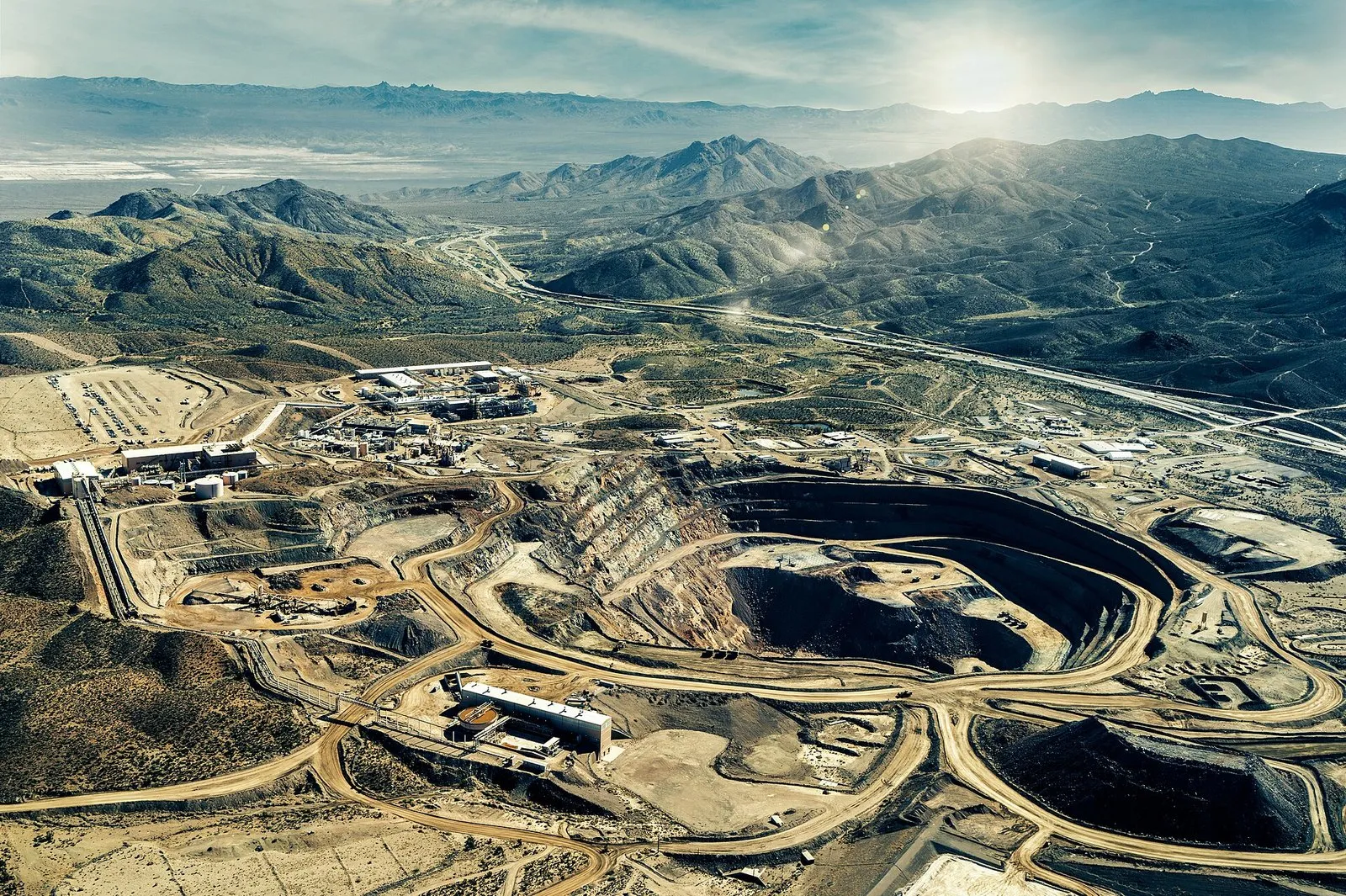
Soft and close to the surface, the clay is dug up directly, with no explosives, crushing or grinding. According to the company, the plant has five stages: screening, ion exchange, filter presses and precipitation, thickening and concentrate filtration.
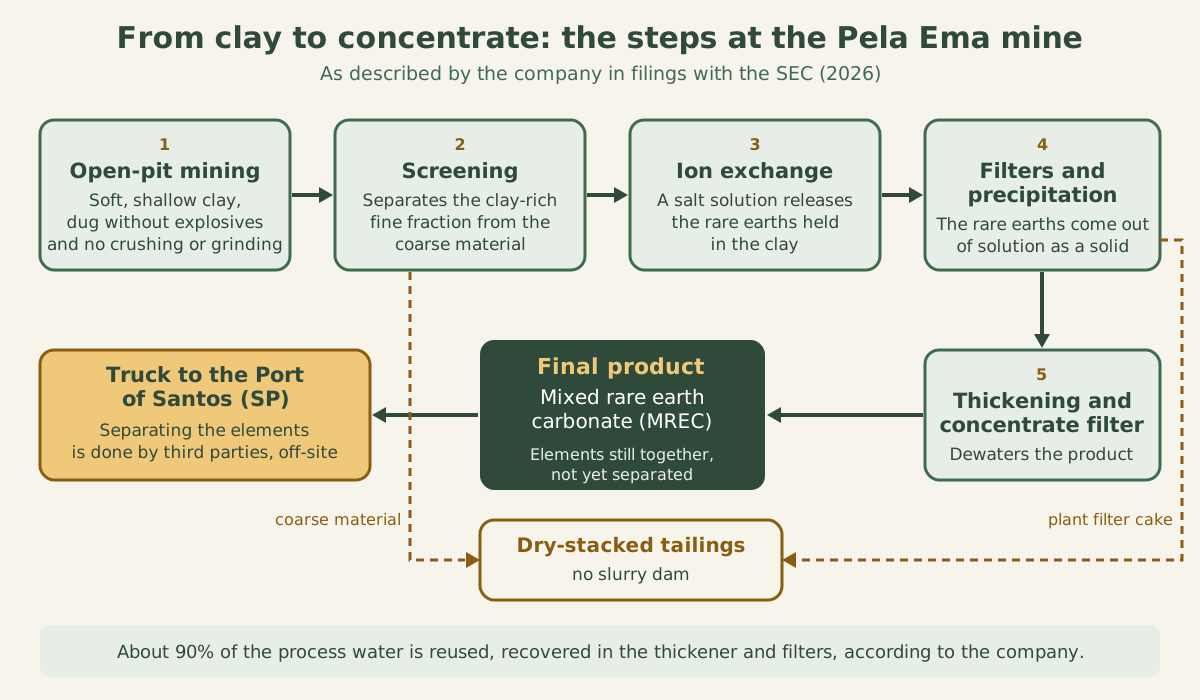
In ion exchange, a salt solution trades places with the rare earth ions held on the clay and carries them away. The company mentions reagents such as sodium chloride (table salt) or ammonium sulfate, a fertilizer. The rare earths are then precipitated, that is, they come out of the solution as a solid.
The result is a mixed rare earth carbonate (MREC), with the elements still together. Separating each one is done by third parties, outside the mine. Find out why this stage is so difficult in How rare earths are separated: the hardest step in the chain.
The tailings (the coarse material from screening and the filter cake) go to a dry stack, with no slurry dam, and about 90% of the water is reused, according to the company. The difference between the two systems is explained in Tailings dams: what they are and why some are dangerous.
How much the mine produces and what the targets are
Production is still far from the planned capacity. The figures are the company’s, in tonnes of total rare earth oxides.
| Period | Ore processed | Oxides produced |
|---|---|---|
| 2024 | 584,946 t | 150 t |
| 2025 | 132,173 t | 40 t |
| Target for the end of 2026 | rate of about 4,000 t per year | |
| Second stage (under construction) | average of 6,400 t per year |
The 2025 drop, according to the company, was a decision to carry out maintenance, implement an optimization program and cut spending while it closed financing. In September 2026, USA Rare Earth forecast a rate of 4,000 tonnes per year by the end of 2026 and the start of commissioning of the 6,400-tonne stage within 12 months.
Under the current plan, the mine lasts more than 20 years using less than half of the estimated resource. The company is studying a phase 2, which could double the ore mined by around 2030 and would require new licenses.
A 15-year history
- 2011: the American fund Denham Capital buys Serra Verde Pesquisa e Mineração.
- 2013: the company applies to the Goiás state government for its environmental license, according to Jornal Opção.
- 2019 and 2020: the installation license is issued, the state completes the licensing and construction of the plant begins.
- December 2023: Semad-GO issues the phase 1 operating license.
- January 2024: production begins, with the first sales the same year. Agência Pública notes that the start had been expected in 2022.
- January 2026: Serra Verde closes US$ 565 million in financing with the DFC, the U.S. government’s development finance agency.
According to USA Rare Earth, more than US$ 1.1 billion has been invested in the mine.
The purchase by USA Rare Earth
On April 20, 2026, USA Rare Earth announced the purchase of 100% of Serra Verde for US$ 300 million in cash and about 126.8 million new shares, equivalent to about US$ 2.8 billion at the share price at the time. Under the agreement, the former owners would hold about 34% of the combined company. The purchase was completed on September 3, 2026.
USA Rare Earth wants to bring mining, separation, metals and a magnet factory together in a single company, with operations in the United States, the United Kingdom, France and Brazil. The political debate around the sale is covered in Why is everyone talking about rare earths?.
The offtake contract
Phase 1 output of neodymium, praseodymium, dysprosium and terbium, the four elements in permanent magnets, is sold to a vehicle capitalized by the U.S. government and private investors. The contract was announced as a 15-year deal. According to the text filed with the SEC, it runs until the product of 198 million tonnes of ore has been delivered or until 20 years after the start of commercial operations, whichever comes first.
The buyer pays even if it does not take the product (a “take-or-pay” contract), and there are minimum prices per kilogram, adjusted by 2% a year:
| Element | Minimum price |
|---|---|
| Terbium | US$ 2,050 per kg |
| Dysprosium | US$ 575 per kg |
| Neodymium | US$ 110 per kg |
| Praseodymium | US$ 110 per kg |
When the market pays more than the minimum, Serra Verde keeps 70% of the difference. On August 24, 2026, the company said the contract had taken effect and that deliveries were due to begin at the start of the last quarter of 2026. The buyer plans to resell the concentrate to whoever will separate it.
Licensing and impacts
Who issues the licenses. Environmental licensing is handled by the Goiás State Secretariat for the Environment and Sustainable Development (Semad-GO), under a cooperation agreement with Ibama, Brazil’s federal environmental agency, and mining is overseen by the National Mining Agency (ANM). The operating license is valid until October 18, 2028 and requires water monitoring, erosion control, revegetation, effluent treatment and a mine closure plan.
The challenge. Observatório da Mineração, an organization that monitors the sector, argues that licensing should be federal because the ore has associated uranium and thorium, and notes that Ibama suggested taking the process back in April 2026. The company says it has all the licenses needed for phase 1. The topic is covered in Are rare earths radioactive? Myths and facts.
Deforestation. According to the Observatório, Semad-GO fined Serra Verde for clearing native vegetation at springs in the Cerrado, Brazil’s tropical savanna. A settlement agreement reduced the fine from R$ 152,600 to R$ 76,300 (Brazilian reais).
Neighbors. In 2025, two neighboring families told Agência Pública that two streams that rise in the mine area had developed a kind of reddish grease and that the company collected samples without getting back to them. When contacted, Serra Verde did not respond about the streams and said it maintains a strong relationship with the communities of Minaçu.
Jobs. At the end of 2025, the mine had about 350 employees and 260 contractors, and the company plans to hire 300 more as it reaches phase 1 capacity.
Frequently asked questions
Where is the rare earth mine in Goiás?
In Minaçu, in northern Goiás, about 30 km from the town. It is Serra Verde’s Pela Ema mine, the only one with commercial rare earth production in Brazil.
What does Serra Verde produce?
A mixed rare earth carbonate, a concentrate in which the elements are still together, notably neodymium, praseodymium, dysprosium and terbium. Separation is done outside the mine.
Who owns Serra Verde?
Since September 3, 2026, the American company USA Rare Earth, which paid about US$ 2.8 billion in cash and shares. Before that, the company was controlled by foreign funds such as Denham Capital.
Who buys the output?
Phase 1 output of the four elements used in magnets is sold to a vehicle financed by the U.S. government and private investors, with guaranteed minimum prices.
Does the mine use a tailings dam?
No, according to the company. The tailings are filtered and dry-stacked, and about 90% of the process water is reused.
Found this article useful? Share it with someone who also wants to understand mining.
Share
Sources
- USA Rare Earth – USA Rare Earth Completes Combination with Serra Verde Group, press release attached to Form 8-K filed with the SEC (September 4, 2026)
- USA Rare Earth – USA Rare Earth Announces Definitive Agreement to Acquire Serra Verde Group for ~$2.8 Billion, press release attached to Form 8-K filed with the SEC (April 20, 2026)
- USA Rare Earth – Supplemental Disclosures (description of Serra Verde's business and results), attached to Form 8-K filed with the SEC (May 13, 2026)
- Serra Verde – Serra Verde Announces Finalization of US Government Offtake Agreement, press release attached to Form 8-K filed with the SEC (August 24, 2026)
- Mining.com – USA Rare Earth boosts Western supply with $2.8B Brazil deal (April 20, 2026)
- BNamericas – Serra Verde receives operating license for Brazil rare earths project (December 26, 2023)
- Jornal Opção – Goiás conclui licenciamento ambiental de mineradora que vai explorar terras raras em Minaçu (Goiás completes environmental licensing of a mining company that will extract rare earths in Minaçu) (May 27, 2020)
- Agência Pública – Do amianto às terras raras: cidade de Goiás vive entre passado e futuro da mineração (From asbestos to rare earths: a town in Goiás between the past and future of mining) (July 1, 2025)
- Observatório da Mineração – Factsheet Terras Raras no Brasil (Rare Earths in Brazil factsheet) (September 2026)
Comments
No comments yet. Be the first to comment.