Neodymium magnets: what they are and why they're in electric cars and wind turbines
What the neodymium-iron-boron magnet is, who invented it, why it's so strong, where it's used, why it has dysprosium and terbium, and why China leads.
Translated from the original article in Portuguese. Read the original.
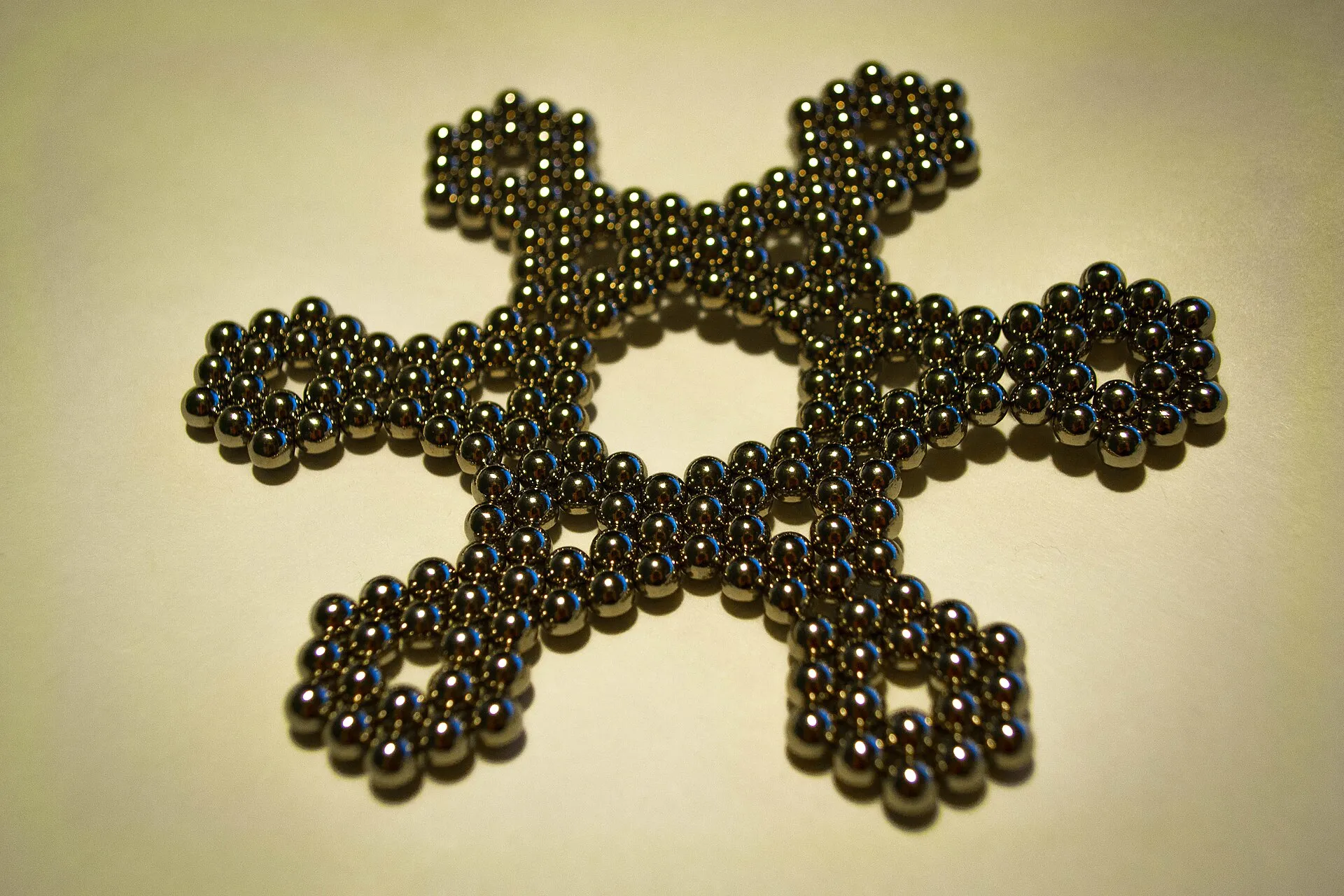
The neodymium magnet is an alloy of neodymium, iron and boron, known by the abbreviation NdFeB. According to the US Department of Energy (DOE), it is the strongest magnet available on the market. That strength in a small space explains why it is in the motor of most electric cars, in the generator of many wind turbines, and in small objects such as speakers and hard drives.
In short
- The neodymium magnet (NdFeB) is about 30% rare earths, mainly neodymium and praseodymium. The rest is iron and boron.
- It was created in the early 1980s, independently, by Sumitomo in Japan and by General Motors in the United States.
- Small additions of dysprosium and terbium help the magnet keep its strength at high temperatures, such as those in an electric car motor.
- China accounts for almost 95% of the world’s permanent magnet production, according to the International Energy Agency (IEA).
- Recycling is still small, and alternatives exist, but they tend to be less efficient or more complex.
What a neodymium magnet is
A permanent magnet is a piece that keeps its own magnetic field without needing an electric current. The neodymium magnet is the most powerful in this family.
According to the DOE report on the supply chain for these magnets, published in February 2022, rare earths make up about 30% of the magnet’s mass: besides neodymium, there is praseodymium, another light rare earth. The rest is iron and boron.
There are two main types:
- Sintered: a solid, dense block, suited to harsher conditions and higher temperatures. This is the type used in electric car motors and wind generators and, according to the DOE, it accounted for about 93% of the NdFeB magnet market.
- Bonded: the magnetic particles are held together by a plastic resin. It tends to be weaker and more brittle, but it allows complicated shapes.
If you want to understand what rare earths are first, read Rare earths: what they are, what they’re used for and why they matter to Brazil.
Who invented the neodymium magnet
Before it, the strongest magnet was samarium-cobalt, developed in 1969, according to the Honda Foundation. In the 1970s, the rising price of cobalt practically stalled research on that material, according to IEEE Spectrum magazine.
The solution came from two places at the same time. Masato Sagawa, of Japan’s Sumitomo, and John Croat, of the General Motors research laboratory in the United States, independently arrived at the neodymium-iron-boron alloy. The two companies filed patents in early 1982, and the two groups presented their results at the same conference, in Pittsburgh, in 1983, according to IEEE Spectrum.
Each followed a different manufacturing path. Sagawa developed the sintering process, and Croat the rapid solidification process, which gave rise to bonded magnets. In 2023, the two received the Honda Prize for inventing what the foundation describes as the world’s most powerful permanent magnet.
Why it is so strong
The answer lies in the crystal structure. In the compound Nd₂Fe₁₄B, the magnetism of the atoms strongly prefers to point in a single direction. This preference is called magnetic anisotropy, and in NdFeB it is exceptionally high. That is why the material strongly resists having its magnetization reversed, which is exactly what you want from a good permanent magnet.
In practice, this means a lot of magnetic force in a small volume. According to the DOE, NdFeB’s magnetic energy density at temperatures up to about 180 °C makes it possible to build smaller and lighter components, or more efficient ones of the same size. According to Sagawa, without this magnet it would have been hard to miniaturize the computer hard drive.
The role of dysprosium and terbium
The weak point of the neodymium magnet is heat: at high temperatures, it loses its magnetization more easily. That is where two heavy rare earths come in: dysprosium (Dy) and terbium (Tb).
According to the DOE, additions of 0.5% to 11% Dy or Tb improve resistance to demagnetization above 120 °C, but make the magnet more expensive, because dysprosium is among the most expensive rare earths. Electric car motors run hot and need these reinforced magnets. Hard drives and speakers, on the other hand, use little or no dysprosium.
Industry is trying to save on these elements. According to the DOE, a manufacturing technique called grain boundary diffusion can cut the heavy rare earth content in half, and companies such as Toyota have already developed heat-resistant magnets with little or no dysprosium.
Where neodymium magnets are used
The DOE lists wind turbines, electric vehicle motors, hard drives, cell phones, speakers, industrial motors, power tools and e-bikes. In 2022, electronics and industrial motors made up most of the demand, but electric cars and wind power were growing.
Electric cars
In most electric and hybrid cars, the motor that drives the wheels is a permanent magnet synchronous motor: the DOE estimated that 90% to 100% of them would use this motor in 2025. This type is preferred because it is lighter and more compact, more efficient and has more torque. Each electric car motor generally uses 1 to 2 kg of magnetic material. And the magnet is not only in the main motor: a hybrid car can have about 100 motors, large and small, according to the Honda Foundation.
Wind turbines
Not every wind turbine uses a rare earth magnet. The most common generator works with a gearbox and does not contain these magnets, the DOE explains.
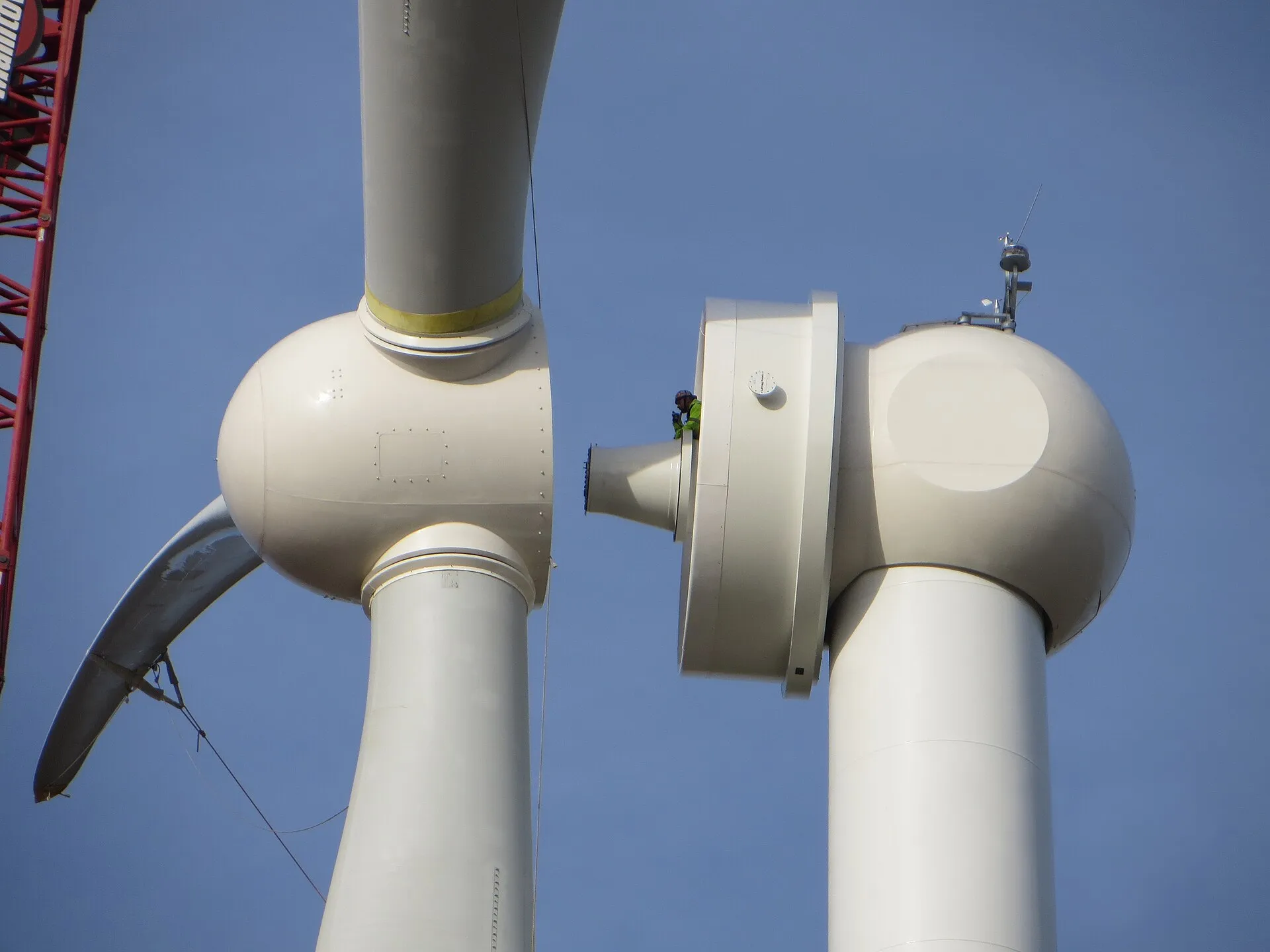
Neodymium magnets appear in direct-drive turbines, in which the rotor turns the generator without a gearbox. This type is preferred at sea (offshore wind), because it requires less maintenance, is efficient and is lighter, which allows larger turbines. According to the DOE, each megawatt of capacity uses 2.7 to 3.2 metric tons of permanent magnet.
Who produces neodymium magnets
Production is even more concentrated than mining. According to an IEA report released in April 2026, China accounts for almost 95% of the world’s permanent magnet production. Two decades earlier, China’s share was about half. The United States, meanwhile, produced less than 1% of the world’s NdFeB magnets, according to the DOE (2020 data).
This dependence has become a government concern. The USGS records that, in April 2025, China began controlling exports of seven rare earths, including dysprosium and terbium, precisely the ones that provide heat resistance. The USGS also reports that possible purchases for the US government’s strategic stockpile in fiscal year 2025 included 450 metric tons of neodymium-iron-boron magnet blocks.
To understand the context of this dispute, read Why is everyone talking about rare earths?.
Can they be recycled?
Yes, but only a little so far. The DOE explains that most current recycling uses scrap from cutting the magnets at the factories themselves. Recovering magnets from discarded devices is done only on a small scale.
The potential is large. According to the IEA, recycling could reduce the need for mined rare earths by up to 35% by 2050.
Are there alternatives to neodymium magnets?
Yes, with limitations. According to the USGS, there are substitutes for many rare earth applications, but they tend to be less efficient. The main options are:
- Ferrite magnets and intermediate magnets: ferrite magnets are much weaker than NdFeB. According to the DOE, research is looking for magnets with strength between the two, including replacing part of the neodymium and praseodymium with cerium or lanthanum, rare earths that are more abundant and cheaper.
- Magnet-free motors: since the Zoe model, Renault has used externally excited synchronous motors in its electric cars, which have copper windings in the rotor instead of magnets. BMW adopted the same solution. These motors reduce material costs but are more complex to manufacture, and permanent magnet motors remain dominant, according to an IDTechEx analysis published by MOTOR magazine.
- Turbines with a gearbox: they do without magnets, but are not ideal for large offshore turbines, according to the DOE.
The DOE sums up the difficulty: replacing NdFeB with another type of magnet is unlikely with current technology, because no other has a similar energy density.
Warning: strong magnets are not toys
The strength that makes the neodymium magnet useful also makes it dangerous for children. The US Consumer Product Safety Commission (CPSC) warns that swallowed magnets can attract each other, or another metal object, and get stuck in the digestive system. This can cause perforations, twisting or blockage of the intestines, infection and even death. That is why the recommendation is to keep small, loose magnets away from children.
Frequently asked questions
What is a neodymium magnet made of?
An alloy of neodymium, iron and boron (NdFeB), with about 30% rare earths. Magnets for high temperatures also contain dysprosium or terbium.
Why is the neodymium magnet so strong?
Because of the Nd₂Fe₁₄B crystal structure, which keeps the magnetism of the atoms aligned in one direction. The result is a lot of force in a small volume.
Does every electric car use neodymium magnets?
Most do, in permanent magnet synchronous motors. But there are exceptions: some automakers, such as Renault and BMW, use motors with copper windings in the rotor instead of magnets.
Does every wind turbine have neodymium magnets?
No. The most common type of generator uses a gearbox and does not contain rare earth magnets. They appear mainly in direct-drive turbines, which are preferred at sea.
Found this article useful? Share it with someone who also wants to understand mining.
Share
Sources
- US Department of Energy (DOE) – Rare Earth Permanent Magnets: Supply Chain Deep Dive Assessment (February 24, 2022)
- USGS – Mineral Commodity Summaries 2026: Rare Earths (February 2026)
- IEEE Spectrum – The Magnet That Made the Modern World, by Glenn Zorpette (June 21, 2022)
- Honda Foundation (via Kyodo News PR Wire) – announcement of the 2023 Honda Prize for Masato Sagawa and John Croat (October 4, 2023)
- Honda – Honda Foundation announces the 2023 Honda Prize (September 29, 2023)
- Science Japan (JST) – Inventors of the neodymium magnet receive the Honda Prize (December 2023)
- Indian Chemical News – report on the IEA report Rare Earth Elements: Pathways to Secure and Diversified Supply Chains (April 9, 2026)
- Anadolu Agency – report on an International Energy Agency (IEA) report on rare earths (April 8, 2026)
- Crystallography365 (International Year of Crystallography 2014) – Neo-mag: the strongest permanent magnet of them all!, by Kirrily Rule
- MOTOR / IDTechEx – Rare Earth Free Motors Take Back Seat in EVs (May 28, 2024)
- CPSC (US Consumer Product Safety Commission) – warning about high-powered neodymium magnets (May 23, 2024)
Comments
No comments yet. Be the first to comment.