Minerals in construction: sand, crushed stone, limestone and more
Sand, crushed stone, limestone, gypsum, clay, stone and iron: the minerals used in construction, how much is used, how it is licensed and the impacts.
Translated from the original article in Portuguese. Read the original.
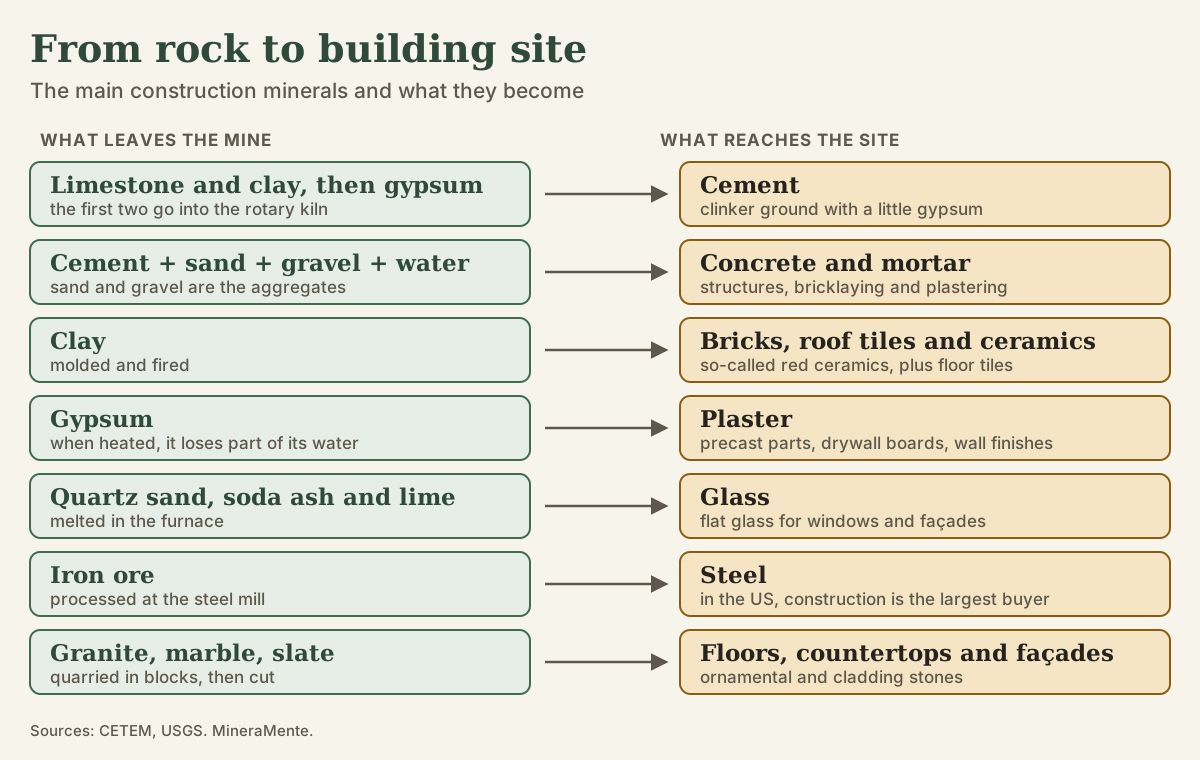
Minerals in construction are, for the most part, simple and cheap materials that come out of the ground in enormous volumes: sand, crushed stone, limestone, clay and gypsum. They become concrete, cement, bricks, roof tiles and plaster. Added to them are iron ore, which becomes steel, the quartz sand in glass and the dimension stone used in floors and countertops.
In short
- Sand and crushed stone are the aggregates, the “stone” part of concrete and mortar. By tonnage, they are the most produced mineral goods in Brazil.
- Limestone and clay become cement; gypsum controls how cement hardens and becomes plaster.
- Clay becomes bricks and roof tiles; quartz sand, glass; iron ore, steel.
- In Brazil, sand, crushed stone and clay can be mined under the licensing regime (Law 6,567/1978), with a license from the municipal government, an environmental license and registration with the National Mining Agency (ANM, Brazil’s mining regulator), on up to 50 hectares.
- The biggest environmental concern is sand taken from rivers, which can cause erosion and harm biodiversity.
Aggregates: sand and crushed stone
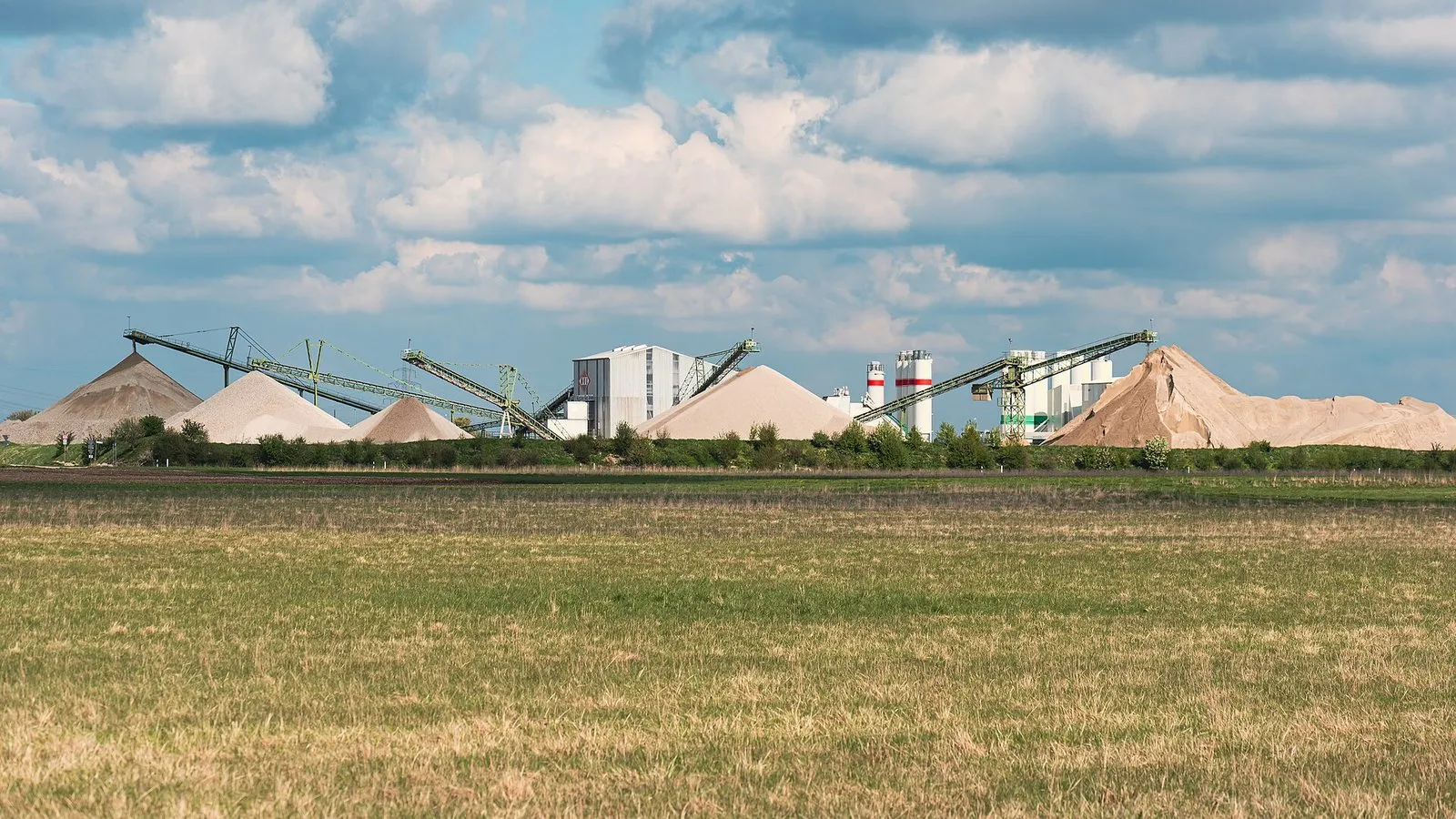
An aggregate is the granular material that, mixed with cement and water, forms concrete and mortar. The two main ones are sand and crushed stone, which is rock broken up in crushers (a rock, not a mineral; see Mineral, ore and rock: what is the difference).
According to the 2004 Mineral Summary, published by the former DNPM (Brazil’s National Department of Mineral Production, now the ANM) with text by the National Association of Construction Aggregate Producers (Anepac), about 85% of Brazilian crushed stone came from granite and gneiss, 10% from limestone and dolomite and 5% from basalt and diabase. For sand, 70% came from riverbeds and 30% from floodplains.
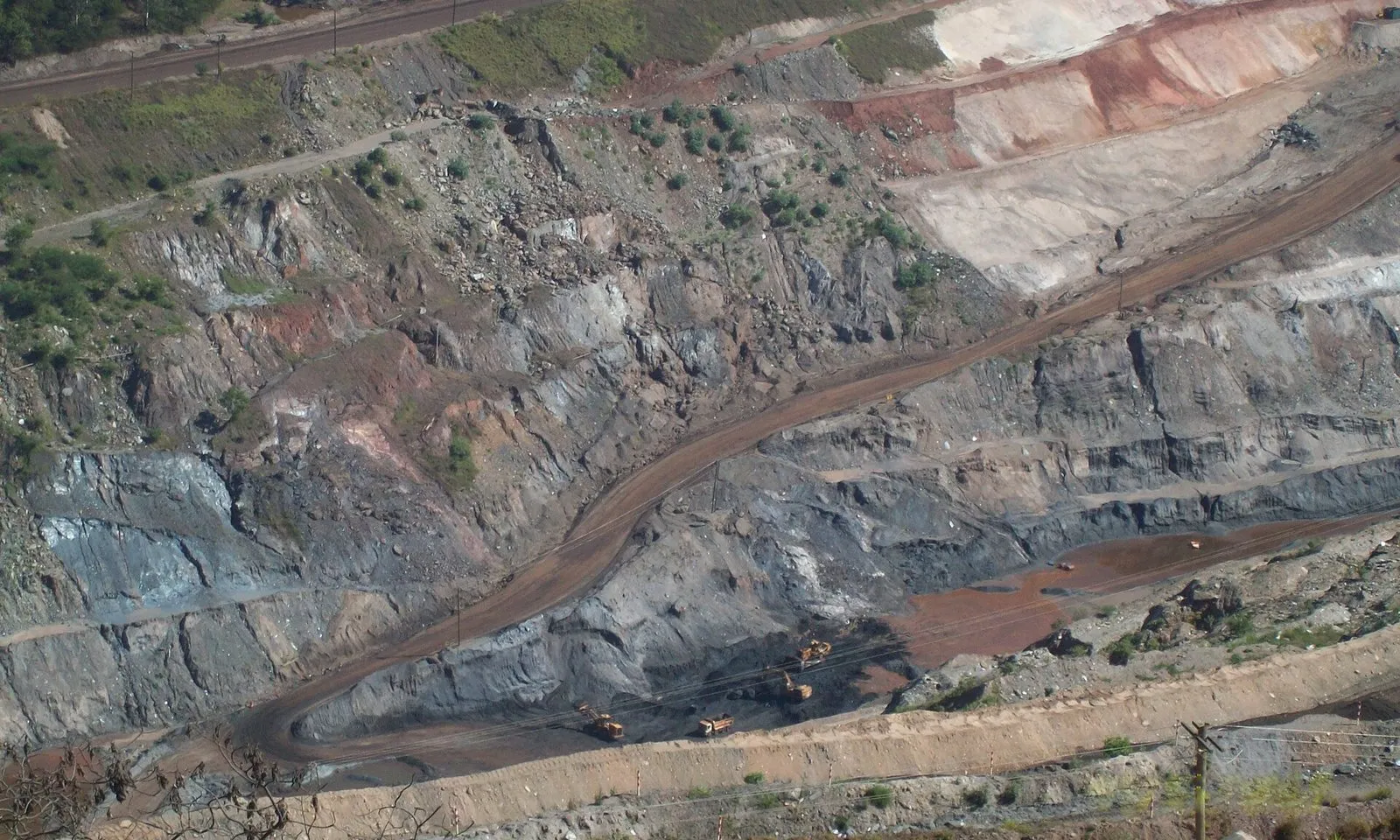
Because it is worth little per tonne, aggregate has to be produced close to the buyer. The same document estimated that transportation accounted for about two-thirds of the final price of sand and one-third of that of crushed stone. That is why quarries and sand pits are located near cities. Extraction is usually done in open pits and quarries (see Open-pit or underground mining: how the method is chosen), and crushed stone goes through crushing and screening, steps explained in Mineral processing: how ore becomes a product.
How much is used
Aggregate figures for Brazil come mainly from the industry itself. According to Anepac, in a presentation to Brazil’s Chamber of Deputies in 2021, the country produced 605 million tonnes of aggregates in 2020: 353 million of sand and 252 million of crushed stone, about 2.8 tonnes per inhabitant. In April 2026, the director-general of the ANM, Mauro Sousa, said that sand, crushed stone and clay exceed iron ore in tonnes traded, according to Agência iNFRA.
Worldwide, a 2022 report by the United Nations Environment Programme (UNEP) estimated the use of 50 billion tonnes of sand and gravel per year, the most used resource after water.
| Material | Figure | Source |
|---|---|---|
| Cement in Brazil | 67 million t sold in 2025 (+3.7% over 2024) | SNIC, via Agência iNFRA |
| Cement worldwide | about 3.8 billion t in 2025 (estimate) | USGS |
| Crude steel in Brazil | about 35 million t in 2025 (estimate) | USGS |
| Gypsum in Brazil | about 5.8 million t in 2025 (estimate) | USGS |
Limestone and cement
Portland cement starts with clinker, produced in a rotary kiln from calcareous, siliceous, aluminous and ferrous materials, according to the U.S. Geological Survey (USGS). The Center for Mineral Technology (CETEM, a Brazilian federal research center) lists limestone, clay, sand and gypsum as the minerals in cement. The clinker is ground with a little gypsum and, increasingly, with additions such as blast-furnace slag.
Limestone is the main ingredient. CETEM calculates that each tonne of cement requires about 1.4 tonnes of limestone. And it has to be a limestone rich in calcium carbonate and low in magnesium.
In 2025, cement sales in Brazil totaled 67 million tonnes, according to data from the National Cement Industry Association (SNIC) cited by Agência iNFRA, still below the record of 73 million in 2014.
Gypsum and plaster
Gypsum is a calcium sulfate with water in its structure. It plays two roles in construction:
- In cement: it is added to clinker, in a proportion of 2% to 5%, to retard setting, that is, hardening. According to the USGS, gypsum has “no practical substitute” in the manufacture of portland cement. In Brazil’s South and Southeast, because of freight costs, CETEM notes that plants replace natural gypsum with phosphogypsum, a by-product of the fertilizer industry.
- As plaster: heated to between 125 °C and 180 °C, gypsum loses part of its water and becomes plaster. Mixed with water, it hardens again. That is where drywall panels, precast pieces and wall finishes come from.
Most of it comes from the Araripe Gypsum Hub, in western Pernambuco, a state in northeastern Brazil. According to the Geological Survey of Brazil (SGB), the state produced 1.7 million tonnes in 2017, 80% of the national total. Estimates vary widely: the USGS, which revised its figures for Brazil, calculates about 5.8 million tonnes for the country in 2025.
Clay: bricks, roof tiles and ceramics
Common clay is the raw material for what Brazilians call red ceramics: blocks, bricks, roof tiles, floor tiles and pipes. According to CETEM, the wet mass goes through extruders that shape it and is then fired, usually at relatively low temperatures, from 800 °C to 900 °C. Using 2006 data from the industry association, CETEM estimated about 5,500 plants and 30 billion pieces per year in Brazil.
Dimension stone, glass and steel
- Dimension stone: granite, marble, quartzite and slate, extracted in blocks and cut into slabs for floors, countertops and facades. Brazil is the largest supplier of granite to the U.S.: between 2021 and 2024, it accounted for 41% of the value imported by the United States, according to the USGS.
- Glass: industrial sand, rich in quartz and low in iron, supplies the silica. Sand, lime and soda ash make up about 90% of the raw materials for glass, and common glass contains 70% to 74% silica, according to CETEM.
- Steel: it comes from iron ore. In the U.S., construction was the largest destination for steel in 2025, with 31% of shipments, according to the USGS. More uses in Mining in everyday life: what comes from mines and is in your home.
How a quarry or sand pit is licensed in Brazil
Law 6,567/1978 created the licensing regime, simpler than the regime of exploration permit followed by a mining concession. Under Article 1, it applies to:
- sand, gravel and saibro (a clayey weathered rock) for immediate use in construction;
- crushed rock for immediate use in construction;
- dressed stone for paving blocks, curbs and gutters;
- clays for various industries, dimension and cladding stone, and calcium and magnesium carbonates (added by Law 13,975/2020).
The main rules are:
- Maximum area of 50 hectares.
- Specific license from the municipal government of the municipality where the deposit is located.
- The right belongs to the landowner or to whoever has the owner’s authorization.
- Environmental license, submitted after the ANM’s review.
- License Registration with the ANM, with a fee of R$ 272.63 (Brazilian reais), according to the service page on gov.br.
The deposit can be mined without prior exploration when its characteristics allow it. In 2024, the ANM opened a public consultation to simplify the regime. Another particularity: Brazil’s General Environmental Licensing Law excluded mining from the License by Adhesion and Commitment (LAC), which is issued based on a statement by the developer, except for sand, gravel and crushed stone. See the step-by-step process in Environmental licensing of mining in Brazil: how it works.
Impacts and the problem of river sand
Because production needs to stay close to cities, urban growth surrounds quarries and sand pits and ends up making deposits unviable, according to the 2004 Mineral Summary. But the most sensitive environmental issue is sand taken from rivers and coastlines.
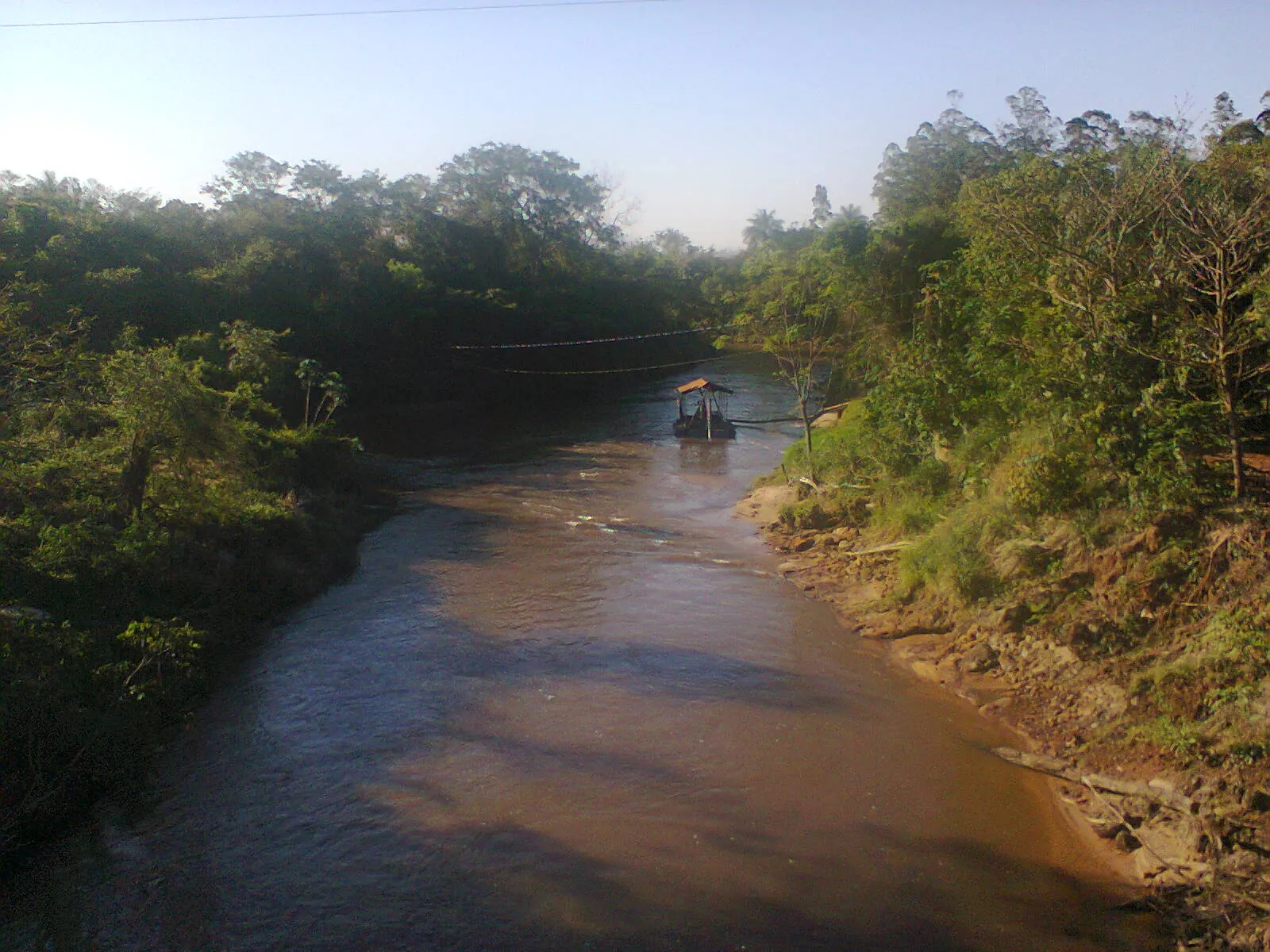
According to UNEP, removing sand where it plays an active role, such as in rivers and coastal ecosystems, can cause erosion, salinization of aquifers, loss of protection against storm surges and harm to biodiversity. The 2022 report recommended banning extraction from beaches. Among the alternatives, it cited crushed rock and sand obtained from mine tailings. In Brazil, manufactured sand, made from the fines left over from crushing, was already growing as a substitute for natural sand in 2004, according to the Mineral Summary.
Frequently asked questions
What are the main minerals used in construction?
Sand and crushed stone (the aggregates), limestone and clay (for cement), gypsum (for cement and plaster), clay for bricks and roof tiles, quartz sand for glass, iron ore for steel and dimension stone for floors and countertops.
What is cement made of?
Clinker, produced in a rotary kiln mainly from limestone and clay, ground with a little gypsum. According to CETEM, each tonne of cement consumes about 1.4 tonnes of limestone.
Do you need authorization to take sand from a river?
Yes. In Brazil, under the licensing regime of Law 6,567/1978, you need a license from the municipal government, an environmental license and License Registration with the ANM, for an area of up to 50 hectares.
Will sand run out?
According to the USGS, there is plenty of sand and gravel in the world, but it may be scarce near cities. UNEP warns that using about 50 billion tonnes per year requires treating sand as a strategic resource and replacing part of it with crushed rock, recycled materials and sand from tailings.
Found this article useful? Share it with someone who also wants to understand mining.
Share
Sources
- Law No. 6,567/1978 (licensing regime), as amended by Laws 8,982/1995 and 13,975/2020
- Gov.br / ANM – Requerimento de Registro de Licença (Licenciamento Mineral) (application for a license registration, mining licensing regime), page updated June 26, 2026
- Law No. 15,190/2025 (General Environmental Licensing Law), Art. 22, added by Law 15,300/2025
- Cescon Barrieu – ANM abre Consulta Pública nº 05/2024 para simplificar o Regime de Licenciamento (ANM opens Public Consultation No. 05/2024 to simplify the licensing regime, 2024)
- USGS – Mineral Commodity Summaries 2026: Cement
- USGS – Cement Statistics and Information
- USGS – Mineral Commodity Summaries 2026: Sand and Gravel (Construction)
- USGS – Mineral Commodity Summaries 2026: Gypsum
- USGS – Mineral Commodity Summaries 2026: Stone (Dimension)
- USGS – Mineral Commodity Summaries 2026: Iron and Steel
- Agência iNFRA – Vendas de cimento crescem 3,7% e fecham 2025 em 67 mi de toneladas (cement sales grow 3.7% and close 2025 at 67 million tonnes; January 9, 2026, SNIC data)
- Agência iNFRA – ANM defende desburocratização no tratamento de minerais da construção civil (ANM calls for less red tape for construction minerals, April 14, 2026)
- DNPM/ANM – Sumário Mineral 2004: Agregados para construção civil (Mineral Summary 2004: construction aggregates; text by Anepac)
- Anepac – Indústria Brasileira de Agregados (the Brazilian aggregates industry), presentation to the Chamber of Deputies working group on the Mining Code (August 25, 2021)
- CETEM – Rochas e Minerais Industriais, 2nd ed. (2008), ch. 1: Panorama das rochas e minerais industriais no Brasil (overview of industrial rocks and minerals in Brazil)
- CETEM – Rochas e Minerais Industriais, 2nd ed. (2008), ch. 5: Areia industrial (industrial sand)
- CETEM – Rochas e Minerais Industriais, 2nd ed. (2008), ch. 16: Calcário e dolomito (limestone and dolomite)
- CETEM – Rochas e Minerais Industriais, 2nd ed. (2008), ch. 23: Gipsita (gypsum)
- CETEM – Rochas e Minerais Industriais, 2nd ed. (2008), ch. 33: Argila para cerâmica vermelha (clay for red ceramics)
- SGB – Sumário executivo do Projeto Agrominerais Aveiro (executive summary of the Aveiro Agrominerals Project: gypsum and limestone in Pará)
- UNEP – Our use of sand brings us against the wall, says UNEP report (press release of April 26, 2022, reproduced by the UN)
Comments
No comments yet. Be the first to comment.